In this super sized issue of Sunday Strategy, we look at seven stories to think about next week, including: repricing date night, the widening AI gap between agencies and their clients, the guilt now forming around AI use, the stubborn scarcity of female breadwinners, why Zara’s “death pants” hit harder than the failure itself, how America lost the World Cup and won over the world with ranch dressing as its real champion, and the rave that ends before lunch.
In addition, we have ads from Citeo, Aguila, Backmarket, Nike & the MLS.
// Stories of the Week:
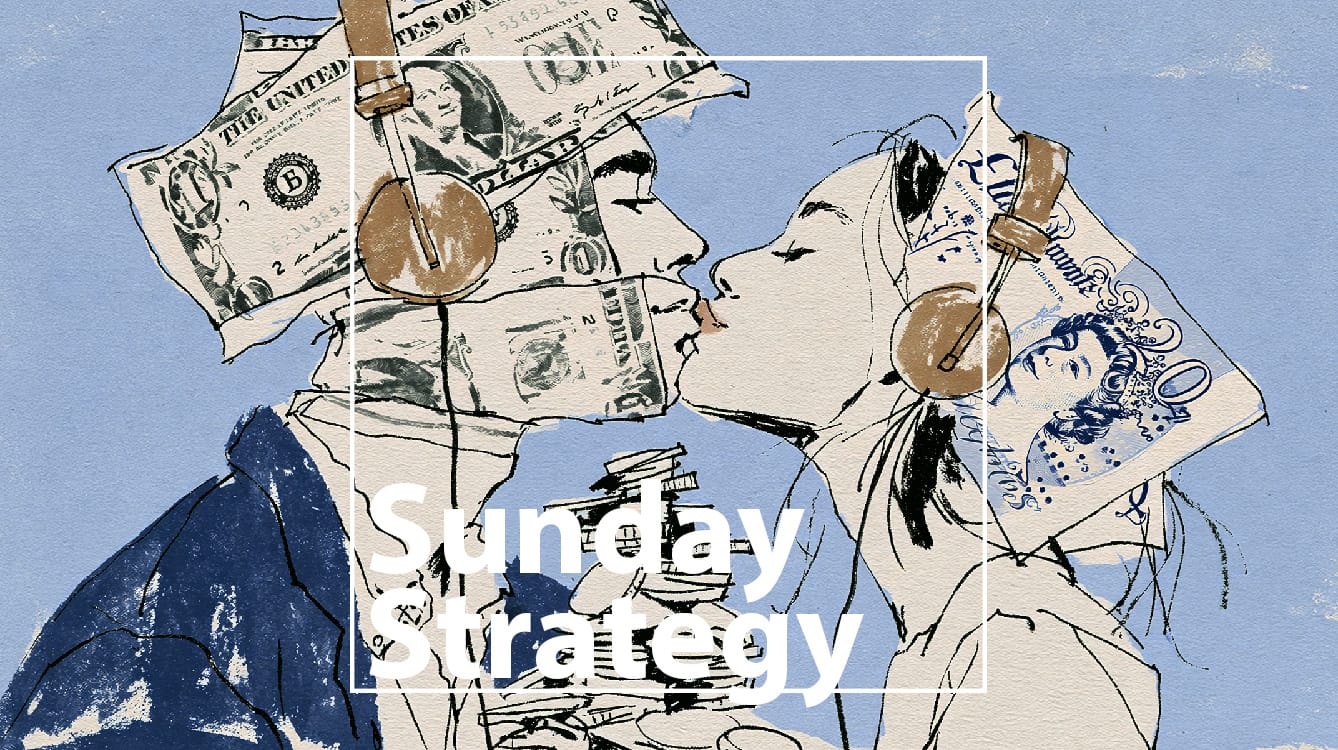
1.) Are Younger Singles Priced Out of Looking for Love?
With the average US date now running $189 all-in (up 12.5% in a year), a typical single American will spend $2,300 annually (BMO Real Financial Progress Index). It’s not surprising then, that half of Gen Z daters say those costs interfere with their financial goals – 47% of singles say dating is simply not worth it financially, and the average number of dates has slipped from about fourteen a year to twelve (BMO).
The squeeze has priced younger singles out of searching for love. Roughly half of Gen Z now spends nothing at all on dating in a typical month, 53% of men and 54% of women (Bank of America), and 42% openly decline plans they cannot afford. Hinge has developed around this tension in April, with a profile feature listing three date ideas, as walks and coffee are among the most chosen.
Beyond date ideas, dating finance anxiety has shifted attractive characteristics. 61% of Americans call frugality an attractive trait in a partner and 56% say a coupon on a date is fine (Talker Research). However, not everything has changed as 71% of men still expect to pay for everything early on (BMO). Brands are moving to address that gap, with Applebee’s running its $100 Date Night Pass, twelve date nights covering up to $600 of food, for a third straight year (combining coupon acceptance with lingering gender roles).
The date-night is being repriced, and the status signals, attitudes and brands are helping pull it towards more workable ground.
This story is part of a trend Airgo tracks: Value-First Consumption
2.) Is the Agency / Client AI Gap Real?
In the race for agencies to adopt AI, are they leaving clients behind? That’s the view Digiday reports from Cannes, as agency bosses claim that they’re further along than the brands they serve. Another claims that as their agency’s AI platform has grown in revenue and functionality, what clients are ‘ready for’ isn’t keeping up.
So is the gap really there? Or are we seeing a case of agencies as software vendors, who’ve disconnected from clients and their needs? Forrester found in a recent report that 9 in 10 US agencies now use Generative AI and half report using Agentic AI, with a focus on ‘productivity’ over ‘creativity’. The issue may be that clients go to these agencies for ‘creativity’, not just ‘productivity’ and ‘cost savings’. A lack of client appreciation for growing capabilities may be down to a sophistication gap or it may be a sign of less unique relevance on what’s being sold as ‘AI innovation’ by agencies.
Many clients can buy AI cost saving for themselves. Hyundai’s own bidding agents cut its online-video CPMs by 67% and its cost per high-value action by 20%. Two thirds of large multinationals already run an in-house agency and 56% plan to move more production in-house (WFA), and 60% of senior marketers say they spent less with agencies last year specifically because of AI (Typeface). Every agent an agency demos is a potential working proof of concept for the client to run on their own. In innovating with AI, agencies need to ensure they’re selling something clients can’t get elsewhere.
This story is part of a trend Airgo tracks: Efficiency’s Hidden Costs
3.) What AI Keeps Us From Knowing
When does AI usage shift from productivity hack to guilty secret? A recent reddit thread from a soon to graduate college student stated that they were redoing classwork, originally done and successfully submitted with AI, to ensure they actually ‘knew’ the skills and facts behind it.
The story taps into a growing ‘guilt’ around AI as we cognitively ‘outsource’ work to it. A KPMG and University of Melbourne study of more than 48,000 people across 47 countries found that 57% of employees hide their AI use and pass off AI-generated work as their own. An Atlassian experiment with 961 knowledge workers shows why: colleagues who disclosed using AI were rated as “10 times lazier” and were 24 points less likely to be recommended for high-visibility projects, despite identical output. This unease runs deeper in the younger workers: 62% of Gen Z admit they rely too heavily on AI and 46% say it is eroding their skills (GoTo and Workplace Intelligence), while Dartmouth writing professor Jeff Sharlet, collecting anonymous student reflections on AI, found none that described it as improving their education.
The shift isn’t purely ‘anti-technology’ as much as cognitive concern. There is a difference between ‘knowing’ something and ‘understanding’ something – which AI use has yet to fully reconcile. “This isn’t a technology problem,” says Molly Sands, who runs Atlassian’s Teamwork Lab. “It’s a social and cultural one.” What was a social guilt around ‘shortcutting’ has become an internal worry about depriving ourselves of skills and experience.
This story is part of a trend Airgo tracks: Algorithmic Burden
4.) The Stubborn Scarcity of Female Breadwinners
Despite strong support for female breadwinners in culture – the reality lags behind. Women now account for 3/5ths of US university graduates, but in most households men remain the primary earners. In just 16% of US opposite-sex marriages the wife is the primary or sole breadwinner, against 55% for husbands, with earnings roughly equal in the other 29% (Pew). The share of wives earning as much or more has tripled since 1972, to 45%, but then stalled short of parity.
The ceiling to this is norms, not just earning power. From the well published ‘chore gap’ in housework independent of earning proportion (women do two more hours of it a week vs. men in relationships) to gender income and equity disparity – systemic barriers to greater female breadwinners exist. However, gender norms may be the largest barrier. According to the Economist, a recent study finds a sharp drop in the number of couples right at the point the wife would out-earn her husband, visible in US data but absent in Sweden and Finland.
Recent studies of US, Swedish and Australian couples all find that husbands out-earned by their wives reported greater ‘psychological distress’. While the leap between this anxiety and the economic reality is still broad, we may be seeing lingering attitudes that oppose changing cultural narratives.
5.) When Product Failures Become Social Media Memes
A modern product failure isn’t just a consumer issue, its PR and social media fodder. Zara’s Flowy Wide Leg Pant, priced at $45.90, has floor-grazing hems and a slippery drape that wrap around the wearer’s feet mid-stride. TikTok christened them “death pants” and turned the potential faceplant into social media fascination. One creator’s trip-and-bloody-elbow clip cleared 1.2 million views, others posted a fractured knee and a broken wrist, and the meme jumped from social feeds to Salon, CBC and the New York Post inside a week. Zara has said nothing – but how do you come back against a ‘death pants’ claim?
6.) America Lost the World Cup, but Won Over Everyone Else
While the US Men’s Team may have crashed out of the World Cup thirteen days before the final – the country’s World Cup may lay claim to being the most successful media event the country has ever put on. Attendance reached 6.26 million through the quarterfinals, nearly double the previous record set at USA 1994 (FIFA), despite ticket prices being exponentially higher. USA against Belgium drew 30 million viewers on Fox, the largest audience for a soccer match in US television history (despite being a roundly tepid affair for the US), the England-Argentina semifinal averaged 15.1 million (despite being traumatic to English viewers), up 131% on the 2022 semis (Sports Media Watch), and Telemundo’s group-stage audience climbed 122% over 2022.
The big numbers are more impressive given this is a country where, per Gallup’s polling, more Americans call themselves figure-skating fans than professional soccer fans. What visitors took home was something similarly unexpected: 91% of international travelers say they left glad they came and 61% left with a more favorable view of America (US Travel Association), the UK’s football policing chief called England fans’ conduct in unsegregated American stadiums “exemplary”, and Erling Haaland flew home with $750 taxidermied raccoons from Dallas.
The US’s biggest ambassadors may not have been the figures everyone expected. Waffle House, Buc-ee’s, and Waymo did, over a 39-day tournament, something no thirty-second spot could buy. The biggest contributor may have been our salad dressing – as visiting fans discovered ranch the way Americans discover tapas. Resulting in TSA-compliant ranch kits from Kraft and Hidden Valley ‘Ranch-bassadors’ on their way to Europe, the creamy sauce may have led the charge. As the Wall Street Journal put it, “The best advertisement for America was simply America itself.” (and its various late night eateries, gas stations and condiments).
This story is part of a trend Airgo tracks: Rooted Bid for Global Recognition
7.) The New Night Out in 2026 Ends by Noon
The night out is beginning and ending at dawn. Coffee raves, an espresso bar plus a DJ with doors at 9am, have grown 478% year over year, sauna raves are up 256%, and sober-curious gatherings are up 92% (Eventbrite’s 2026 Social Study). In New York, sauna raves and cold plunge parties are up 900%, Denver’s soft-clubbing listings have more than tripled (303 Magazine), and the Guardian has already named the scene: grind core.
The shift is generationally focused. 61% of Gen Z say they want to drink less for the sake of sleep, mental health and fitness, against 41% of all US adults (Eventbrite), and the formats follow a morning-centric logic: connection over hookup, caffeine over alcohol, home by lunch with the whole day intact. Eventbrite is now rolling out dedicated soft clubbing listings across nine US cities, and cafes, gyms and bathhouses are discovering they own a nightlife venue that happens to be closed at night.
While the evening is still a premium social occasion, with an entire marketing economy from beer to ride shares built on it – earlier, sober focused events are opening up new social real estate while trying to provide a unique experience. The change may be expanding the social calendar vs completely re-aligning it, but for now, the most interesting threat to nightlife may come with breakfast.
This story is part of a trend Airgo tracks: Real-Life Antidote
// Stat of the Week: The AI-Trust Gap Doesn’t Travel
The question is usually whether people trust AI yet, but a better question may be ‘where people trust AI’. In the US, YouGov finds just 28% of Americans trust AI assistants against 70% for traditional search engines, and the country ranks last of 19 markets on AI-search adoption, at 48%. Turn the globe and it changes. Accenture’s Consumer Pulse Survey, a poll of 25,590 consumers, finds 90% of Indian shoppers trust an AI agent’s recommendation over their best friend’s, 36% would switch their preferred brand on an AI’s say-so, and nearly 30% already use large language models as their main way to find products.
// Ads You Might Have Missed:
1.) ‘Resize the Price’ – Aguila:
World Cup team jerseys have increased in price to a point where many fans struggle to keep up. With authentic jerseys exceeding $100, Colombian beer Aguila, official beer of Columbia’s national team, let fans buying the official team jersey choose how large the Aguila logo was printed on it – the bigger the logo, the lower the price, sliding from around $150 down to $20, or up to 87% off. It flips the logic behind brand sponsorship: instead of asking fans to wear a brand’s ad for free, it pays them to, turning the most resented part of a kit into the reason to buy one. The overwhelming majority reportedly chose the largest logo, and the work took Colombia’s first ever Gold Lion at Cannes 2026.
This ad is part of a trend Airgo tracks: Tribal Signaling
2.) ‘Swear on Our Mom’s Life’ – Back Market:
Refurbished electronics brand Back Market has upped the stakes on their quality claims, as the founder stakes his own mother’s life on the reliability of refurbished tech. While it may just be her entire life’s possessions, the deadpan ad ironically by Mother takes a novel turn on their biggest barrier. Refurbished goods have a natural concern as to whether it will actually work, and rather than argue the point, the brand puts metaphorical skin in the game with a bit of humor.
This ad is part of a trend Airgo tracks: Durability as Rebellion
3.) ‘You’re Mad’ – Nike:
Being an English Men’s Football fan has been a roller coaster this World Cup. After some initial doubts, claims it was ‘coming home’ grew vs. Norway, crashing into a disappointing final 20 minutes against Argentina. Despite an exit in the semi-finals, failing to end 60 ‘years of hurt’, the team delivered a 6-4 win over France in the third place game, shifting the cycle of hope onwards to the Euros and 2030 World Cup.
Watching it from the outside, you’d have to say they’re a little mad – and Nike’s new ad does just that. Made in under 48 hours, between England’s quarter-final win over Norway and its semi-final loss to Argentina, Wieden+Kennedy’s film has Wayne Rooney in his classic St George’s face paint answering a doubtful deli worker’s monologue on the team’s history – with “We’re not mad. We’re English.” It’s an ad that moved quickly due to hopes of a finals appearance, but surreptitiously captured the mood of the team anyway.
This ad is part of a trend Airgo tracks: Aspirational Patriotism
4.) ‘Thanks World, We’ll Take It From Here – Come Kick It’ – MLS:
Timed to today’s final, MLS’s largest-ever campaign, tries to convert a month of global soccer attention towards the domestic league. The larger question may not be if interest in football in the US increases after the World Cup, but if it stays focused at home or moves towards the Premier league and others. With EPL commanding morning viewing for many fans, alongside Bundesliga, La Liga and others – the MLS may need to do more than ‘take over’ from the World Cup, it may need to show ‘Why Us’ vs. more prominent international heirs.
This ad is part of a trend Airgo tracks: Mass Moment Sports
5.) ‘Lingette-moi’ – Citeo:
France’s packaging-and-waste body hired musician Philippe Katerine for an original pop song sung from the point of view of a single-use wipe pleading to be put in the bin rather than flushed. It is a compliance message handed the cultural tactics usually reserved for consumer brands. When a government-adjacent body matches the private sector on charm, the power of creative ambition is on show.
// Sunday Snippets
// Marketing & Advertising //
– Jellycat’s Wimbledon social ad scored 5.7 stars in System1’s testing, a mark only about 1% of social ads ever reach. [Advertising]
– Dentsu struck a deal with Meta to build the plumbing for mass influencer activation. [Creator Economy]
// Technology & Media //
– ChatGPT keeps expanding its ad targeting, now adding CRM lists and bid controls. [AI]
– Europe’s ad market is up 10.5% to 131 billion euros, even as the incumbents argue over who lost the plot. [Advertising]
// Life & Culture //
// Related Issues
– Are We All Becoming Luddites?
– Dopamine Shopping vs. Gamifying Purchase
// Until Next Sunday
As always, let me know what you think by email (dubose@newclassic.agency), website or on LinkedIn. You can also listen to an audio summary and discussion of each week’s newsletter on Spotify. We’re also on TikTok!