In this issue of Sunday Strategy, we look at nine stories to think about next week, including:
– The First AI Election?
– The Companies That Leaned In Are Leaning Back
– Influencers Are the Butt of the Advertising Joke
– Coca-Cola Stops Measuring Brand Love
– Why Young People Watch TV With the Words On
– How Do You Fix Mascot Hate?
– Young Americans Are Buying Y2K Cars in Cash
– The Midterms Are Pricing Local Advertisers Out of Christmas
– The Next GLP-1 Market Is the People Who Stop
In addition, we have ads from Firefox, Sephora x Seth Rogen, Ferrero Rocher Spain, SickKids Foundation and Barclays UK.
// Stories of the Week:
1.) The First AI Election?
AI aims to help us make more decisions in our life, so will it in our elections as well?
Tuesday’s midterms will be the first where AI can shape, at scale, what voters read, what they watch and how they intend to vote. However, fewer of them are asking a chatbot than the potential suggests. Pew finds 8% of US adults have used one for election information this year, with most of them doing so to learn where the candidates stand on issues.
While the numbers are low, what they get back depends on what the machine can read. When The Washington Post had six chatbots write more than 3,000 voter guides in late September, they named no congressional district 48% of the time and the wrong one in 22% of the rest, partly because they leaned on new voter-guide sites, many apparently also AI-written.
This limited information poses a real risk to shaping AI attitudes. This week NPR found a network of 37 websites, all registered on the same day and some posing as local news outlets, turning up in about half of one chatbot’s answers on competitive House races. More campaigns are writing to sway machines, as Reuters reports more political AI strategists’ fees are tied to “AI recommendation share”.
AI is making the ads as well. The Wesleyan Media Project counts at least 220 AI-made or AI-enhanced political ads with 45% deepfaking a candidate. Its co-director calls 2026 “the first AI election”, though he also calls the $137m spend on AI ads “a drop in the bucket”.
Most prominently, AI is on the ballot. Of 20,751 political ads on social media mentioning data centres this year, 42% backed them and 31% opposed them in January. So far in October, 57% are against and 3% for. Gallup has put data centres on its midterm issues list for the first time.
This story is part of a trend Airgo tracks: Manufactured Consent 2.0
2.) The Companies That Leaned In Are Leaning Back
Can companies stay politically neutral?
For many brands, politics is a balancing act. As YouGov’s 2024 ‘Bipartisan Brands’ report showed, the choice of dish soap and coffee often divides down party lines, with few engaging in politics without choosing a side.
Those who have engaged with power are rebalancing. For two years, many American companies leaned toward the White House, some even donating to the new White House ballroom. However, with Tuesday’s midterms expected to weaken President Trump, the Economist reports companies are rebalancing. Palantir has enlisted Democratic aides, and once the ten biggest donors are stripped out, executives’ giving to Democrats rose from 36% in 2025 to 51% in the second quarter of 2026.
Those who don’t engage with politics can still be pulled into it. After Obama said Trump had the White House “looking like Saddam Hussein opened a Cheesecake Factory,” the Treasury Secretary ate at one and Trump praised the chain. The Cheesecake Factory said nothing while Google searches for it jumped 70% in a week, and its 27 Oct results call skipped the joke as well.
Shoppers are swayed by brands’ political moves. In a survey for SmartCustomer and Goods Unite Us, 51% of US shoppers say they stopped buying from a company over its politics in the past year, up from 30% in a 2024 version of the survey.
If big business re-weights its allegiances whenever power looks set to shift, can brands move as fast as power or are all of them doomed to stay on one side of the aisle?
This story is part of a trend Airgo tracks: Conditional Loyalty
3.) Influencers Are the Butt of the Advertising Joke
Brands are more focused than ever on the market opportunity from influencers, but the way they are portraying them is less nuanced.
Progressive’s “Momfluencer” casts Natalie Palamides as Mara, who “attempts to adopt the cheerful, curated persona of a parenting influencer”, and makes her the punchline. Additionally, recent ads from Planet Fitness Australia mock ring-light gym influencers, and Crest’s ‘Reality Checkup’ series, in which a dentist checks a scene from everyday life, includes a spot titled ‘Get Ready With Me’. The influencer has become a stock character trope, the way the pushy salesman once was.
Yet plenty of young people still want the job. When South Korea’s education ministry asked pupils what they want to be in 2025, creator came third among primary pupils at just 4.8%, behind athlete and doctor. Marketers asking got a much bigger number, as 44% of Gen Z adults told Morning Consult in June 2025 that their ideal career includes making content, including 19% who want to do it full-time.
Marketers and young people may see the value in influencers, even if ads themselves have reduced them to a ring light.
This story is part of a trend Airgo tracks: Influencer Hangover
4.) Coca-Cola Stops Measuring Brand Love
Marketers may be falling ‘out of love’ with ‘brand love’.
At Oct 21’s ANA Masters of Marketing, Coca-Cola’s CMO Manolo Arroyo said: “For years, the key metric for Coca-Cola’s marketing teams was brand love.” It didn’t reliably track results, so the company “decided to shift to total consumer base, which is a behavioral-driven metric”, counting the people who drink a Coke product at least once a week. On stage he was blunter: “With age and with experience, I do not believe any more in love,” and “Love can be increased as well, but it follows the behavior.”
Quarterly performance fits with this shift. In Q3 volume rose 5% and net revenue 7%, so Coca-Cola grew mostly by selling more drinks rather than raising prices.
However, before we throw love out the window, it may be more of a case of nuance than a full split. We may still be talking about love, just a different kind. In his 1986 triangular theory of love, the psychologist Robert Sternberg split love into three parts: intimacy, passion and commitment. Passion tends to peak early and fade while commitment lasts, as one summary puts it. Coca-Cola has stopped measuring the passion and started quantifying the commitment: the person who reaches for a Coke every week. In Sternberg’s terms, it’s still love, just a different type.
5.) Why Young People Watch TV With the Words On
When accepting his Golden Globe, Parasite director Bong Joon-ho said of subtitles, “Once you overcome the one-inch tall barrier of subtitles, you will be introduced to so many more amazing films.“ Now new research shows that the one inch barrier may be broken.
Half of young Britons now watch TV with the subtitles on according to YouGov, with 53% of 18 to 24-year-olds preferring them, against 20% of 55 to 64-year-olds.
Part of the reason may be the sound. In a 2022 survey by the language-learning app Preply, 78% of Americans said they struggle to hear dialogue over loud background music. Amazon built “Dialogue Boost” to lift voices above music and effects, and in April 2025 Netflix added dialogue-only subtitles, saying subtitles are on in nearly half of all US viewing hours.
A bigger reason looks to be how young people watch. In an AP-NORC poll from August 2025, 55% of subtitle users said they want to catch every word. Younger adults were more likely to blame noise and multitasking, and only 7% of them mentioned their hearing, against about three in ten users over 60. YouGov’s respondents add keeping the volume low for neighbours or sleeping children.
Advertisers are already adjusting to the shift. ITV will require subtitles on every ad from January 2027. However, if younger audiences ‘read’ television, where will this leave sonic branding and music?
6.) How Do You Fix Mascot Hate?
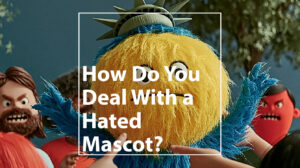
On Sunday 25 Oct several dozen people stood outside Liberty Mutual’s Boston headquarters asking it to pull its “Liberty Biberty” ads. Its organiser, 19-year-old YouTuber Connor Harvey, announced it in a video that passed 600,000 views, and his demand was simple: “Just bring back the emu.”
The puppet launched this summer with 40% to 50% of marketing spend expected behind it. Liberty Mutual isn’t backing down. Its US marketing chief told Business Insider the company is “encouraged by how strongly people are engaging with him, whether they love him or feel differently”, and says independent testing puts Biberty above average on attention and brand attribution. Meanwhile a Facebook group devoted to disliking him has more than 40,000 members.
As I wrote this week, a mascot’s first job is to be remembered, not liked. Ronald McDonald, the Burger King and Mucinex’s Mr. Mucus are famous without being loved, and in insurance (a category people think about for a few minutes a year) being known is the goal. GoCompare has run this strategy in the UK. Its opera-singing Gio Compario topped polls of the country’s most irritating adverts, and instead of retiring him the brand ran “Saving the Nation” in 2012, with celebrities lining up to silence him.
Mascot hatred isn’t something to fix, but something to harness. Liberty Mutual seems to know it: the answer isn’t to can Biberty in a panic but to make the conversation work for it.
7.) Young Americans Are Buying Y2K Cars in Cash
Younger buyers are getting nostalgic out of economic pragmatism when it comes to cars.
As the average new US vehicle is priced at more than $50,000, under-35s made up less than 10% of new-vehicle registrations in 2024. Experian puts the average monthly payment at $765 for a new car and $542 for a used one, with loans stretching to six or seven years, and a record 21% of new-car buyers pay $1,000 or more a month, according to Edmunds.
So younger buyers are hunting late-90s and 2000s cars they can pay for in cash and fix themselves. One 30-year-old who paid $6,000 cash for a 2010 Jetta five years ago told the Guardian: “I get so much crap from people [about it], but not people my age.”
For buyers priced out of the showroom, the car worth having may be the one with no payment attached. Owning an older car outright has become the new automotive status symbol.
This story is part of a trend Airgo tracks: Ownership Permanence
8.) The Midterms Are Pricing Local Advertisers Out of Christmas
Days before the midterms, political spending and bookings have passed the entire 2024 presidential cycle: $11.21bn against $11.20bn according to AdImpact, on the way to its projected $11.6bn. About $8.2bn of it is going to TV or connected TV, Digiday reports and online is filling up too. Political clients spent $149m on YouTube and Meta in the week of 11 Oct, against $34m in the last week of July, according to Digiday.
That spend is landing at the same time as the holidays. In Texas, local TV prices are up 10% to 15% in recent weeks, and 30% to 50% on some programmes. A Minnesota buyer saw premium streaming prices per thousand viewers go from $34 or $35 to $43. Regional advertisers in Texas, Wisconsin, Maine and Michigan now have to “go dark”, move to premium streaming or pay more, in a quarter that can hold up to half of their annual budget.
While a national brand can move its money out of a swing state for a few weeks, a local retailer can’t. How many small advertisers will sit out part of their biggest quarter because of the election?
9.) The Next GLP-1 Market Is the People Who Stop
The food industry’s first GLP-1 adaptation was smaller baskets. The next may be marketing to people who come off the drugs, as those numbers increase. In a US study, covering 125k adults, 65% of people taking a GLP-1 for weight loss without diabetes stopped within a year. Four in ten Britons who stopped this year said it was too expensive. Seven US states have cut back Medicaid cover for weight-loss GLP-1s, and 16% of employers that pay for them are considering stopping, making cost a greater barrier to continued use.
With stopping comes a return to old habits and a chance for new brands. An Oxford review in the BMJ finds weight comes back at about 0.4kg a month after people stop a GLP-1. Alongside weight, shopping drifts back too. Cornell researchers found grocery spending falls 5.3% within six months of starting, and NielsenIQ says ex-users’ habits “largely converge back toward non-user norms” within 6 to 11 months.
Simply Good Foods’ chief executive said it is repositioning Atkins for people who have stopped after Atkins’ sales fell 20.9% in its last financial year. Hy-Vee launched a six-week online course in July, with dietitian check-ins, to build habits people can keep once they’re off the drugs.
// Ads You Might Have Missed:
Firefox – “It’s time to come back to Firefox”
Early internet nostalgia isn’t new in advertising, but Firefox has gone hard into it to pull people back to the browser. Internet icons like Numa Numa Guy, Bad Luck Brian, Overly Attached Girlfriend, Tay Zonday and Annoying Orange are back, recreating their original hooks amongst modern annoyances. “Overly Attached Girlfriend may have wanted to know everything about you, but your browser shouldn’t,” and forced AI features come off worse than Annoying Orange. Aimed at people who used Firefox and left, the campaign tries to make an involved argument against the less involved decision of browser use.
In under a week the film passed 3.1 million views on Firefox’s own channel, and the X thread that launched it passed 9.1 million. PetaPixel puts Firefox at 32% of internet users at its November 2009 peak and about 7% of desktop users now. “Firefox was there then, we’re here now,” says CMO John Solomon.
Mozilla has worked with this crowd before, running a campaign with Tay Zonday in January 2008, and Solomon says the idea came from Firefox’s heyday, “when the internet was really fun, weird, and interesting”.
This ad is part of a trend Airgo tracks: AI Backlash
Sephora x Seth Rogen – “We All Sephora”
While South Park’s recent parody of Sephora as a ‘Backrooms’ style liminal space may be more apt for many non beauty shoppers, the brand is hoping to shift attitudes in time for the holidays.
In a new campaign, Seth Rogen, “an unexpected beauty shopper”, works through his gift list with a Sephora adviser, calling pimple patches “face stickers” and leaving with setting spray for his producer, a scent for his cousin and a red-light mask for his mom (and himself). The US and Canadian holiday campaign is aimed at gift-givers who are beauty novices rather than Sephora’s regulars, and Rogen was hired for “an approachable everyman quality”. The store at The Grove in Los Angeles became “Sethphora” for the launch.
The gift buyer is a real gap. According to Ipsos, only 42% of US men aged 18 to 34, and 15% of men 51+, are very comfortable buying cosmetics in person. In Sephora’s own 2024 research, 37% found the beauty store intimidating. While the issue is real, an open question remains around the approach. Is Rogen the everyman who unlocks Sephora for the people who never go in or just part of the ongoing joke about how awkward it is?
Ferrero Rocher Spain – “Juntos Brillamos Más 2026”
For the 13th year, Ferrero Rocher has put Spanish towns to a public vote to see who gets Ferrero Rocher’s Christmas Lights. 34 towns meet in 17 competitions, with the winner getting the lights on December 14th.
An ad supporting it is a 20-second call to vote rather than a big Christmas story, and it passed 1.4 million views on the brand’s channel by October 31st.
SickKids Foundation – “SickKids VS: Life on the Line”
Patient ambassador Olivia Yang, 10, is tethered by IV lines to her future selves, showing the future at risk from illness while set to Billie Eilish’s “everything i wanted”. The SickKids Foundation’s latest ad shows that saving a child’s life also saves every person she will grow up to be with their traditional gritty tone.
https://www.youtube.com/watch?v=3pxC7P4hGLo
Barclays UK – “Statement Dating”
Barclays UK has made a 13-minute YouTube dating show about money. Host Ellie Taylor and “Ollie from Barclays” help a single woman choose between three men by talking through their spending habits and savings goals, recognizing the friction between relationships and financial compatibility.
Barclays’ own survey found 40% would feel uncomfortable talking about money with someone they’re dating, and 45% of 18 to 29-year-olds say rising costs have affected their ability to date. A dating format makes money talk feel normal, and a long episode gives the bank room a shorter spot can’t.
// Sunday Snippets
// Advertising & Branding //
– Walton Goggins plays Scrooge in Walmart’s remake of the opening song from “The Muppet Christmas Carol”, heckled by Statler and Waldorf, and the film reached 13 million views on Walmart’s channel in its first day and a half. [Advertising]
– Coca-Cola has had four independent shopkeepers painted by royal portrait artists, among them a Barnsley chip-shop owner and a Catford corner-shop owner, for a free London gallery show from 28 October. [Advertising]
– Dove has launched its first perfume, a limited fragrance that smells like its Beauty Bar, priced at $19.57 for the year the bar launched and sold only on dovefragrance.com, after years of fans asking for it. [Branding]
– Duolingo marked the iPhone Duo’s launch with a cart of free green apples outside an Apple Store in New York, each stickered “Do your lesson”. [Advertising]
– Tinder’s new line, “The best part of Tinder isn’t on Tinder”, launches Group Hangouts, IRL Events and Double Date, and its own research finds 37% of young singles plan group or double dates in 2026. [Advertising]
– For Halloween, McDonald’s Sweden has been sending app offers from restaurants that no longer exist. [Advertising]
– After the US president insulted Norway this week, Visit Norway answered by posting the world’s most beautiful roadside toilets, from Senja’s Golden Toilet to the wave-shaped loo at Ureddplassen. [Travel]
– The UK ad regulator’s new influencer guide says labels like “Sponsored”, “Spon” and “Sp” don’t make an ad clear enough, nor do platforms’ co-authoring tools on their own. Its rule of thumb is “If in doubt, label it.” [Regulation]
– Pennsylvania will require labels on AI-made ads that could mislead people about a product or service from 21 December. Political deepfakes are still unregulated there, and a governor’s race ad featuring an AI version of the sitting governor ran this week with no on-screen label. [Regulation]
// Marketing & Media //
– Instagram is testing “Features”, long horizontal videos, in the US and Brazil. [Social Media]
– With search traffic drying up, Reddit lost more than a million search visits a week on average in October and says it will become a mostly logged-in site, starting with tests outside the US. [Social Media]
– Five years after quitting Instagram, Facebook, TikTok and Snapchat, Lush still buys no social ads and leans on an app with 2.8 million users and an email list of more than 6 million. Its sales rose to £736m in 2025, from £673m in 2024. [Social Media]
– Microdramas, serialised Shorts told in 60-second scenes, passed 6.5 billion views on YouTube in the first half of 2026, and YouTube is adding seasons, episodes and paid members-only chapters to Shorts. [Media]
– Posts tagged #UKTrains on TikTok are up 247% in three months, TikTok says, as trainspotters and Transport for London staff explain routes, cheap tickets and how to avoid penalty fares. [Social Media]
– In a test with 2,000 US adults, short news videos that listed their sources in the description were trusted more than the same videos without the list. [Media]
// AI & Tech //
– In an online GlobeScan survey across 34 countries, nearly nine in ten people in Nigeria and Vietnam say AI will improve their lives. In America, Canada and France, more people feel negative than positive about its impact on humanity. [AI]
– Human psychics are adding ‘no AI’ clauses to their adverts, as apps sell AI tarot readings for up to $99.99 and AI-generated psychics stream on TikTok Live. [AI]
– The RealReal has made it harder for AI agents to log in, add to cart and check out, after The Verge showed one could keep re-reserving a listing so no human could buy it for hours. [AI]
– In Japan, Klook has put 426,000 bookable experiences inside Meta’s Muse assistant, so travellers can book and pay without leaving the chat. [AI]
– Only about 2.9% of US consumers pay for a generative AI service, and 20% to 45% of subscribers are still paying a year later, against about 70% for Netflix and Spotify, an NBER paper using card data finds. [Tech]
– From 1 January, New York will ban AI chatbots from flattering users, simulating emotions or claiming a personal or romantic relationship with anyone not confirmed as an adult. [Regulation]
– US regulators want robotaxis to show cyan lights when no human is driving, a colour no other road light uses. [Automotive]
– A day after Nvidia’s chief executive played with them on stage, preorders of Microduck robots passed 20,000, with delivery promised before Christmas. [Technology]
// Retail, Food & Drink //
– Poundland, the UK’s first nationwide single-price chain, has filed to appoint administrators, putting 600 stores and up to 12,000 jobs at risk after inflation and discounters wore down its £1 promise. [Retail]
– Sprouts Farmers Market’s incoming chief executive says its pricing “has not delivered” after transactions fell 3.3% last quarter, so the health grocer is cutting prices on holiday staples now and rebuilding its prices nationally in January. [Retail]
– Walmart’s Black Friday and Cyber Monday deals run 14 days this year, up from 10, starting 12 November. [Retail]
– US Halloween candy sales were down 6.7% in mid-October, and Hershey expected a third of its seasonal sales in the final week. [Food & Drink]
– Cheerios now comes with a resealable Ziploc bag inside the box, on Walmart.com from 27 October and at other US retailers in the coming months, after what General Mills calls “hundreds of thousands” of requests a year. [Food & Drink]
– Pop-Tarts and Liquid Death are launching an orange toaster pastry in November, and gave away a ‘Bad Morning’ alarm clock that wakes you with screams, chains and ‘badffirmations’. [Food & Drink]
– Shake Shack ran a two-day ‘Black Truffle Window’ in NYC where customers could bring any food at all and have it truffled. [Food & Drink]
– AB InBev’s no-alcohol beer revenue rose 35% last quarter, as the brewer rolls out ‘Choose Moderation. Choose Beer.’ in more than 40 markets. [Food & Drink]
– CVS is adding Pokémon cards, blind boxes and squishies to its shelves, as adults drive 35% of toy-industry growth. [Collectables]
– Audemars Piguet has opened The Watch Keepers, where owners in Switzerland and Europe can resell AP watches at least two years old, authenticated and re-warrantied by AP itself, at a fixed price or by auction. [Fashion]
// Sport & Entertainment //
– McDonald’s is ending its 32-year World Cup sponsorship after its biggest-ever global campaign, run in some 100 markets, underperformed. In September it had already said it was “overly reliant on borrowed IP”. [Sports]
– Three Chinese sponsors dropped Kylian Mbappé and Chinese state TV suspended LaLiga broadcasts and pulled his ads after he said his favourite meme of himself put his face on Mao. He apologised in English, French and Mandarin. [Sports]
– Roc Nation has booked the Super Bowl halftime show since 2019, and on 26 October the NFL and Apple Music announced that its founder, Jay-Z, will headline the 2027 show himself. [Sports]
– Miller Lite is canning the beer that was coming off its Milwaukee line at 10:13pm, the minute the Brewers won their first World Series, in 4,400 ‘Clinch Cans’, a nod to the 44 years fans waited. [Sports]
– To show viewers its animals aren’t AI, Blue Planet III has kept in the plankton, boats and buoys that earlier series would have cut, and the BBC’s Jack Bootle says not a single frame used generative AI. [TV]
– Nikki’s $49 top from the horror film ‘Obsession’ has a waitlist of more than 27,000, was Google’s third most-searched Halloween costume this year, and since 21 October has been a Fortnite skin. [Culture]
– In the first hour of the second Bayeux Tapestry ticket release, Monzo customers spent £14,100 at the British Museum, twice the opening mornings of The Odyssey or Spider-Man, and 55% of the buyers were under 35, Monzo’s card data shows. [Culture]
– PureGym has written a thumb workout for GTA VI players: fingertip taps, fist curls and finger push-ups, ten of each, before the game lands on 19 November. [Gaming]
– Gymshark’s first gym, in Miami’s Wynwood, now opens in January 2027, its own Instagram post says, after April’s announcement promised summer 2026. [Sports]
// Life & Society //
– Dictionary.com has named “maxxing” its 2026 word of the year, for optimising one part of your life to the limit, from looksmaxxing to tokenmaxxing (using as much AI at work as possible) and nonnamaxxing (living like an Italian grandmother). [Culture]
– Pew finds the youngest US adults attend religious services more than the public as a whole, 41% monthly against 33%, and for the first time in its surveys young men go more often than young women. [Culture]
– The share of Americans under 30 who expect AI to make patient care worse has risen from 29% in 2022 to 45%, Pew finds, making them more sceptical than people over 65. [Health]
– In research by Canva and the Ad Council’s research arm, 64% of Americans were optimistic about their community’s future, against 48% about the country’s and 40% about the world’s. [Consumer Behavior]
– Seven in ten Australians call Halloween an unnecessary American import, YouGov finds, but 52% planned to celebrate it anyway, including 77% of Gen Z. [Culture]
– Make-up artists say people are reaching for prosthetics and special-effects make-up to look as creepy or goofy as possible rather than sexy, and Dazed has declared ‘hot Halloween’ officially over. [Culture]
– The Stroke Association carved a 2.5-metre brain from 8.5 tonnes of ice on London’s Southbank, after its own research found 32% of UK adults don’t realise a stroke is a brain injury. [Health]
– LEGO says it is sending 2.1 million bricks to England’s free school breakfast clubs, part of the government programme that now serves 680,000 children before lessons. [Education]
– A DJ’s plea for clubbers to stop talking has split British clubland, with a rival DJ answering ‘Please Talk on the Dancefloor’ as more clubs copy Berlin’s phone bans. [Culture]
// Until Next Sunday
As always, let me know what you think by email (dubose@newclassic.agency), website or on LinkedIn. You can also listen to an audio summary and discussion of each week’s newsletter on Spotify. We’re also on TikTok!