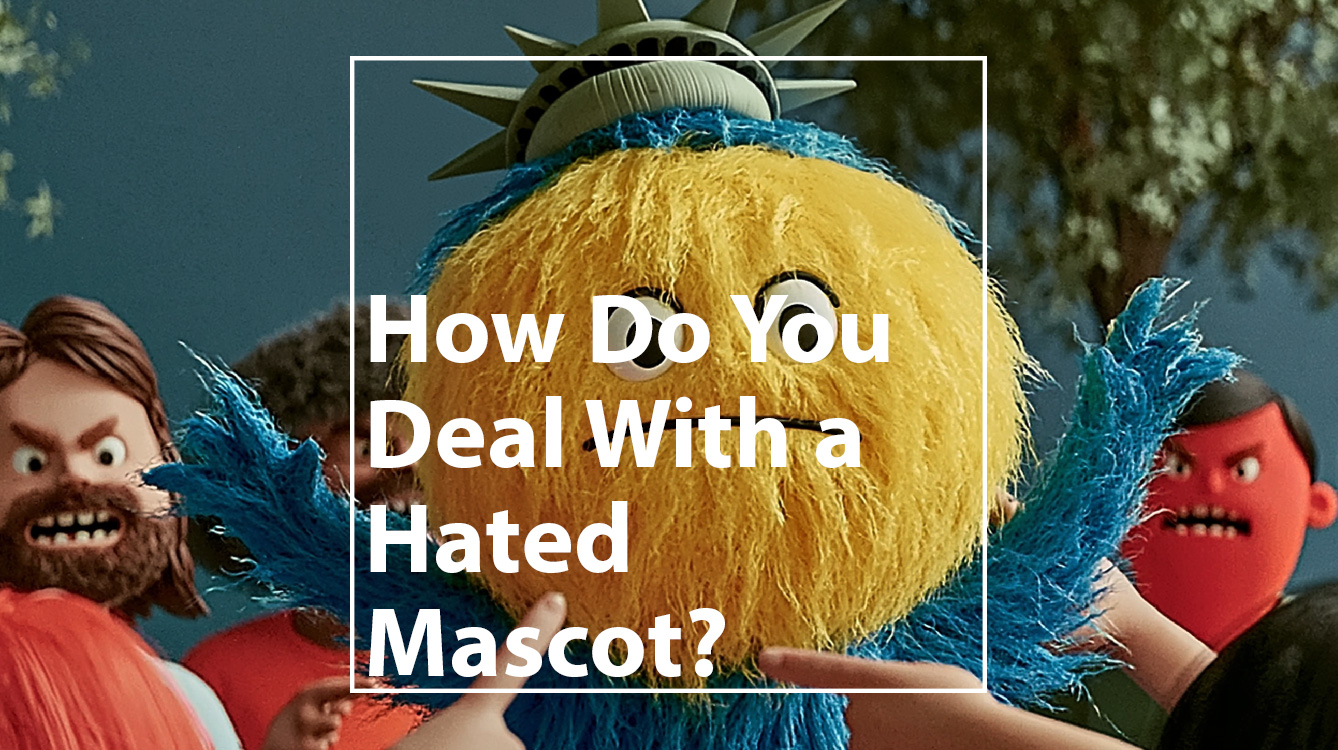
On Sunday 25 October, several dozen people stood outside Liberty Mutual’s Boston headquarters with a single demand. They wanted the insurer to pull the ads starring its new mascot, a fuzzy, wide-mouthed puppet called Liberty Biberty. The organiser, a 19-year-old YouTuber named Connor Harvey, had announced the protest in a video that passed 600k views, and he summed up the movement in five words: “Just bring back the emu.”
In a world currently filled with protest, it’s one of the stranger ones. However, for anyone who has watched American TV since the summer, it’s not impossible to see how it got here.
How an Insurance Puppet Became a National Enemy
Liberty Mutual launched Liberty Biberty in July, its first new brand character in eight years, built to sit alongside its long-running LiMu Emu and Doug.
The launch wasn’t a small bet. CMO Jenna Lebel said that 40 to 50% of the company’s marketing spend would go behind the character, and that it had been a hit in focus groups.
The public has seemingly disagreed with the campaign research.
On 11 October, John Oliver devoted part of Last Week Tonight to the puppet, declaring “I hate this thing.” Reasoning that outrage only gives brands more attention, he asked them to flood the internet with “thirst” art of Biberty instead, and they obliged, mostly with AI-generated images. Two weeks later came the October protest, where one attendee described the ads as “annoying and repetitive.” Liberty Mutual, so far, has said nothing. It may seem like Liberty Mutual faces a giant problem. However, a mascot’s primary job isn’t to be liked, it’s to be remembered.
A Mascot’s Job Is to Be Remembered, Not Liked
It helps if consumers don’t hate you, but which mascots win affection and which don’t is unpredictable. Look at some of the most recognisable, from Ronald McDonald and the Burger King to Mucinex’s Mr. Mucus.
These mascots are familiar, but most wouldn’t claim to engender massive amounts of active affection. Mr. Mucus was rated the least likeable, most annoying and creepiest mascot in a 2019 survey of more than 1,600 Americans, and Mucinex has kept him anyway. Hatred, or more commonly annoyance, is just something they deal with on the way to being known.
Liberty Mutual’s own history makes the point. The emu the protesters now want back wasn’t universally loved either: in a 2022 Harris Poll for Ad Age, LiMu Emu and Doug ranked eighth of nine insurance mascots on favourability. When the emu launched in 2019, the company’s then-CMO was clear about the goal: “As a marketer, I always look for what’s going to be remembered.”
The research backs her up. System1’s analysis of IPA effectiveness data found campaigns with a recurring character were 37% more likely to grow market share and 30% more likely to grow profit, yet only 4% of US ads use one.
A Category Nobody Wants to Think About
Awareness, not affection, is the end goal. This has to be something Liberty Mutual keeps in mind. Insurance is a category consumers think about for a few minutes a year, and usually at a rare switching moment.
Only about 3 in 10 Americans review their insurance each year, and even with prices rising, just 5.1% of auto customers switched in the third quarter of 2026. Plenty more check prices (nearly half of auto policies were shopped at least once in the past year), and that price check is exactly the moment a brand needs to come to mind – hated or not.
Being known through advertising, cultural conversation and even protest achieves the goal. A late-night segment mocking the mascot doesn’t damage that mechanism. Thirst traps didn’t stop Sonic the Hedgehog (don’t Google it), so they probably won’t stop Liberty Biberty. It feeds the machine, and Oliver’s own commentary recognizes this. Risqué memes and content aren’t ideal, but their scale doesn’t look to factor into the equation.
There’s Already a Playbook For What Happens Next
In the UK, Gio Compario, an opera-singing mascot for comparison site GoCompare, was so disliked that the campaign was named the most irritating advert of 2009 in Marketing magazine’s poll. However, GoCompare didn’t apologise or quietly retire him.
Instead, in 2012 it ran “Saving the Nation,” in which celebrities from Sue Barker and Stuart Pearce to Stephen Hawking lined up to silence him. Its marketing chief was candid about the strategy: “We know a lot of people love to hate our moustachioed friend and we are responding to that.” The campaign turned national irritation into the next step in the mascot’s story, before Gio later returned, calmer, and kept selling comparison searches.
The opposite brand action rarely works as well. When M&M’s announced an “indefinite pause” for its spokescandies in January 2023 after a backlash over their redesigns, the characters were back within three weeks.
This month in New Zealand, Kiwibank tried to stamp out crude memes of its sheep mascot with copyright takedowns, and the memes multiplied, with the original post passing four million views. Trying to fix the reaction only made it bigger in a mascot version of the ‘Streisand Effect’.
Harness the Hate. You Can’t Fix It
The lesson here is that mascot hatred isn’t something you fix, it’s something you harness. You can’t change people’s feelings easily, but you can use that feeling to change wider commercial behaviour. GoCompare’s version of that wasn’t standing still: it acknowledged the irritation, turned it into a story, and tuned the character as it went.
Some of the anger at Biberty is also about media frequency rather than the puppet itself. “Annoying and repetitive” is what you’d expect when one character carries up to half a marketing budget, and that’s fixable by rotating him with the emu, not by retiring him.
It’s also early. In Airgo’s US insurance share-of-search data, Liberty Mutual held third place (11.75% share of search in the week of 4 October) with no clear lift since launch, and that was before Oliver and the protest. Whether all this noise turns into searches is the number to watch.
The answer for Liberty Biberty isn’t to kill him off in a panic, it’s to make the conversation work for the brand. Acknowledge it where relevant, build on it, and stay a remembered brand in a category nobody wants to think about often. Hate is bad, but indifference is worse.