“Vibe coding” has a new cousin — “vibe crafting” — and together they’re reshaping how creative work actually gets made. This issue explores what that shift means, plus whether running brands can pull off trolling, where audio podcasting goes next, and what comes after the traditional agency model.
In addition, we have ads from: Tecate, Casper, Legora, Spotify and Bob’s.
// Stories of the Week:
1.) Can ‘Vibe Crafting’ Follow ‘Vibe Coding’?
Platforms like Claude Code, Antigravity and Cursor have introduced coding and software development to the masses – ushering in an era of vibe coding where skill doesn’t limit an idea for a website, software or an app. While many vibe-coded apps fall by the wayside quickly, through either disinterest or debugging, the focus has been squarely on the virtual.
That may be changing. Startups like Schematik are bringing vibe coding to hardware. Tell Schematik what you want to make and it gives you wiring schematics, a shopping list and general instructions for assembly and operation. The effort required is slower than software vibe coding, but with greater opportunities for agentic shopping, it’s likely that soon an ad hoc kit could be on its way to your house alongside a new idea. A potential barrier to immediate action may become a tool to commit to project completion.
Component shopping aside, is there a market for vibe hardware, or will this incrementally grow a thriving but niche DIY hardware market? Complexity can be reduced, but wiring has a different feeling from auto-generated code and a crashed app is different from the disclaimer I received recently to “watch out for the smell of burning” when finishing my DIY 1990s pager plan. We’ve been trained to accept hands-off, standardised hardware as our reality, and while vibe hardware won’t overturn that soon, the bandwagon effect of vibe coding still holds some potential to cross into the physical world. We’re some way from a vibe-crafted iPhone, but the coming years may see DIY toys, cute robots or crafts beyond what we think is possible now.
2.) Does Every Running Brand Have to Be Supportive?
A Nike Boston Marathon ad sparked discussion and was pulled, featuring the line ‘Runners Welcome. Walkers Tolerated.’ The ad, which follows recent years’ OOH across all the marathon majors, is a slight departure from the normal snark Nike has brought to races (from “Whatever you’re doing, keep doing it for 22 more miles” to “Cooked in Chicago”). The Boston work expands from relating with the marathon experience to judging it, more in line with their ‘Winning isn’t for Everyone’ 2024 work. So can a running brand judge runners or are brands stuck with more empathetic and supportive work (like Burger King Belgium’s recent tone)?
Anything that gets us creatively beyond another ‘Rats Don’t Run This City, You Do’ type message should be encouraged (if only for some variety for runners during the race) and sports brands are allowed to take sides. Nike’s 2001 work to troll Tottenham Fans during Sol Campbell’s player transfer to Arsenal (something ripe for a comeback with current form) is rich. Finally, marathons are meant to be hard and advertising is probably easier to overcome than the race itself – spoken as someone who’s stumbled through a few. Nike’s view, that running brands can take sides, that marathons are meant to be hard, that the supportive work needs a foil to mean anything is valid.
However, running culture has become more inclusive and diverse in recent times, despite anger on who got a finisher medal in LA or what Boston charity qualifying looks like. ‘Running’ vs. ‘Walking’ is a particularly loaded split, especially for those who face additional physical challenges. Who Nike is and the brand’s wording may have landed it in hotter water than otherwise. The line between punching down and genuinely provocative is thin. There is arguably room for elitism and even a bit of trolling in running, as long as it articulates itself intelligently – if only so the supportive ads around it have more meaning.
3.) Where Does Podcasting Video Push Leave Audio?
Intimacy seemed to be the backing force behind the growth of podcasts. A story, told intimately through a conversation. A voice that sat squarely in your ears, talking to you about the details of topics you might not have considered before. A stripped back experience that felt like it left premium content. More NPR than NBC, podcasts historically felt like conversations you overheard – whether they came from Ira Glass or Joe Rogan.
However, the age of the intimate audio podcast is gone, as the medium has expanded further into video. YouTube now has over 1 billion monthly podcast viewers and is the most used podcast service amongst weekly US listeners – ahead of Spotify and Apple. Even Spotify is pushing video alongside podcast creation. As the line between podcast and video blurred, the dynamics have arguably changed. Dax Shepard spent years publicly refusing to film Armchair Expert, fearing it would kill the intimacy, before giving in.
With a switch to video first creation, where does it leave audio podcasts? Video has arguably introduced more prepping for virality and clip optimisation on the creator side and the need to watch on the listener turned viewer side. Is there still room for a more intimate and pared back primary focus, or are we seeing podcasting slowly become a video format that doesn’t deliver when you turn away?
4.) What Comes After the Traditional Agency?
If you believe the traditional agency model is on borrowed time, the natural question is: what comes next? The author’s account of why she shut her agency lays out the accumulating pressures facing traditional agencies and hints at what will replace them.
While some large shops will inevitably buck the trend, high-overhead agencies are fighting a margin squeeze and a fundamental shift in how clients scope and buy work. It shows that the age of large teams, in expensive offices, isn’t coming back once market chaos “blows over”. As someone who came of age in those offices (replete with free bars, constant osmosis and social connections) I feel the loss. However, the stability and safety big agencies have prided themselves on offering hasn’t existed for some time. Instead of mourning that, we should be excited about what is forming in their place.
A new generation of agencies (smaller or built differently) won’t offer the same experience, but it isn’t necessarily worse. A more honest focus on pricing, output, and business impact, coupled with flexible ways of working with different talent, is inspiring in its own way. We may be on the cusp of a more proactive relationship with clients and creativity – replacing long arbitrary pitches with faster projects that prove worth or, as Ogilvy’s Rory Sutherland recently suggested, agencies may come to shop solutions instead of seeking a brief.
It’s something that guided how I’ve built New Classic as a permanently small, low-overhead consultancy – with a bet that a wider network of others will do the same. We can miss the traditional agency model, but it can’t stop us from engaging with what’s already coming next.
// Ads You Might Have Missed:
1.)’Welcome Back Paisano’ – Tecate:
Tecate’s latest campaign recognizes the tension around US / Mexican immigration in a playful yet pointed way. ‘Welcome Back Paisano (Fellow Countrymen)’ features an initiative giving Mexicans who’ve returned home jobs at Six, Tecate’s associated stores. Alongside an ad that champions Mexicans as the hardest working and most valuable resource America is now missing out on, the campaign builds national pride in a charged environment, confidently backing Mexican identity. It comes alongside previous efforts that built a bar, and served Tecate with the salt from the Gulf of Mexico – contrasting efforts in the US to rename it the Gulf of America. Tecate pithily keeps attention and air time away from the elephant in the room, subtweeting US policies and cultural conflict without directly calling them out. In an age of absurd politics, with serious consequences, Tecate shows how to balance both.
2.) ‘Daymares’ – Casper:
Mattress brand Casper’s latest campaign asks, who needs nightmares when daily life can be scary enough? ‘Daymares’ tackles Zoom Calls, birthday parties and being trapped in a crowded elevator to highlight why you should prioritize comfort during the safety of sleep. Expanding the ‘comfortable sleeper’ trope used in the category with some daytime suffering, Casper brings something new to the advertising without leaving actionable territory. For a sector as transient as boxed mattresses, a balance of novel and actionable is a useful build.
3.) ‘Last Word Coupons’ – Bob’s:
There are lots of ways brands tap into gaming, but few focus on the moment partner influencers fail. Brazilian fast food chain Bob’s used Battle Royale game PUBG, and its feature that allows eliminated players to speak to their victors in voice chat, to distribute discount coupons throughout March. If players were able to eliminate an influencer, playing as recognizable fast food mascots on servers, they were rewarded with voice comms giving out discount codes. For brands thinking that gaming activations have to require complex builds or partnerships, Bob’s shows that native features and innovative thinking can still make an engaging brand story for gamers.
4.) ‘Law Just Got More Attractive’ – Legora:
Legal AI startup Legora has committed to the (self described) ‘simplest idea’ and run with it, but is the idea keeping up with the market? After a $550m raise and planning its first brand campaign, getting Jude Law based purely on his appearance and his last name seems dangerously simple, but potentially highly talkable. The campaign aims to, in their own words, ‘showcase Legora as the go-to-partner for the future of law’ and as major LLMs increasingly show legal risks in how they advise and hallucinate – an opportunity is there. However, does Legora’s ‘Super Bowl ad’ style approach get them there?
It captures attention, as well as showing the stigma around big budget actors cashing in on ads has truly gone. However, it requires a lot of follow-up to close the gap to ‘partner’. Fighting the default of flawed, but known and accessible LLMs like Claude and ChatGPT, Legora seems to need a bit more than a pun, no matter how good it is!
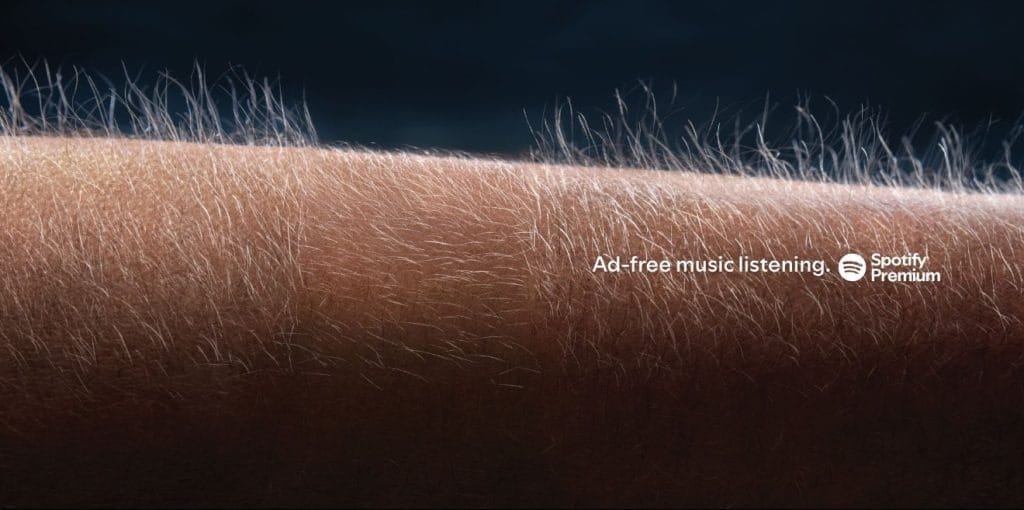
5.) ‘Ad Free Music Listening’ – Spotify:
How do you sell a premium version of a service without denigrating the basics? There’s a delicate dance to ensuring the basic service is attractive, without making it too attractive. Spotify’s new ads to promote Spotify premium do this in a clear visual metaphor. Featuring goosebumps, tears and arm hair standing on end – all interrupted. The ads tell a story visually that words would struggle to nuance. All of Spotify brings emotion from the music you care about, but premium does it without the break. With a smart approach, Spotify has made an ad, that without saying much, quietly destroys other ads.
// Sunday Snippets
// Marketing & Advertising //
– Midas goes Karate Kid with Cobra Kai’s William Zebka, while not making one ‘chop shop’ joke [Auto]
– Dua Lipa begins to take over for George Clooney on Nespresso [FMCG]
– Not content with bringing older mascots back for the Super Bowl, alcohol brand Svedka is introducing a low tech flip phone [Alcohol]
– Vaseline makes products suggested in social from as far back as 2008, and makes them real [FMCG]
– Adidas releases a shoe specifically for athletes with Down Syndrome [Sports]
– Liquid Death partners with Pit Viper to tackle the ‘light at the end of the tunnel’ – offering sunglasses for dead people [FMCG]
– Pepsi has released their ‘Football Nation’ campaign for the World Cup, but does celebrating fans land with so many controversies on pricing, access and experience? [FMCG]
// Technology & Media //
– Historically influencer focused Coachella has seen some creator chaos this year [Social Media]
– However, GAP’s Hoodie House is claiming cultural victory with a Coachella activation that drove interest at scale [Fashion]
– Tim Cook has been announced to step down as CEO of Apple, elevating the SVP of Hardware Engineering, John Ternus into the role [Tech]
– Huawei turns your phone into an AI pose coach [Tech]
– ‘Stop Killing Games’ which aims to prevent online games from being rendered unplayable when servers shut down, is backing a bill in California [Gaming]
– Anthropic launches Claude Design in a move to shift towards visual work [AI]
// Life & Culture //
– Its Padel vs. Roller Skating in East London [Sports]
– Gen Z’s attitude towards AI should worry the entire tech industry [Tech]
– How NIL has changed the dynamics of college to pro progression in American Football [Sports]
– Your Rummikub group has a sponsor: The increasing brand opportunity for small offline communities [Culture]
– Modern media training and ‘coached authenticity’ [Culture]
// Until Next Sunday
As always, let me know what you think by email (dubose@newclassic.agency), website or on LinkedIn.You can also listen to an audio summary and discussion of each week’s newsletter on Spotify. We’re also on TikTok!