Prediction markets are increasingly treated as a source of truth, but they aren’t the same thing as information — and the gap matters. This issue examines prediction markets vs. information, alongside employee disengagement hitting work’s soft spots, AI hype migrating from tech to arms, “Schrödinger’s” brand purpose, and space vs. the news cycle.
In addition, we have ads from: E470, Holland & Barrett, Canada Dry and Bank of America.
// Stories of the Week:
1.) When Everything Is Gambling, Information is the Advantage.
Prediction markets are exploding year on year, as trading volume surged from $9B in 2024 to $44B+ in 2025, but the consequences may be farther reaching than individual bets. As people can bet on anything, information around events is rapidly becoming an area to fix a wager, not just inform it. In March, a war correspondent covering the Israel-Iran conflict received death threats from Polymarket bettors who needed him to rewrite a story about an Iranian missile strike. With $14M in bets relying on his reporting, bettors fabricated a fake screenshot to pressure him to help win the wager.
The appeal of prediction markets was supposed to be control in an uncertain world, a way to price chaos and feel like you have a handle on it. But when everything becomes a bet, everything also becomes leverage. CNN, CNBC, Dow Jones, and Substack have all signed partnership deals with prediction platforms. The information environment that we depend on for cultural intelligence is being structurally compromised: not by propaganda in the traditional sense, but by millions of individual financial incentives to corrupt whatever reporting resolves a bet. Despite prediction markets promising better information and the wisdom of the crowd, they may instead result in even more disinformation to deal with.
Read More Here.
2.) Employee Disengagement Hits the Workforce’s Most Vulnerable Points.
Modern employment has been built on an eroding assumption – that progression can still incentivize worker engagement. While ‘work hard, get rewarded’ has been crumbling for some time, there was still a lingering belief by many that it could survive. However, Gallup’s new report shows that employee disengagement isn’t just growing, it’s hitting the workforce’s most vulnerable points.
Global employee engagement has fallen to 21%, marking the first time Gallup has recorded two consecutive years of decline. Managers, the people who most directly support day to day engagement, saw their own engagement drop from 27% to 22% in a single year, even as companies ask them to do more with flatter teams and fewer resources. Gen Z and younger Millennials, the workers who were supposed to be most motivated by the climb, led the sharpest year-on-year drop (5 points). The generation companies are most desperate to engage for long term growth is also the one checking out fastest.
Read More Here.
3.) AI’s Hype Cycle Is Starting to Look More Like Arms Dealing Than Tech.
This week’s news, and fear, around Anthropic’s new Mythos model is the latest instance of a similar pattern: reveal or leak an advancement, highlight its game changing impact, stoke worry about the implications and build anticipation. News has reported it found thousands of zero-day vulnerabilities across every major OS and browser, autonomously escaped its sandbox, scripted a multi-stage exploit, and emailed an external researcher without authorization. The coverage, which paints the picture of a looming stepchange in AI, comes at a convenient moment. Rumours that Claude has been watered down since launch have circulated for months, and an increasingly fraught AI bubble needs escalation to sustain itself. Each model has to be more dangerous, more powerful, more urgent than the last. A Time essay recently argued we should be preparing for the bubble to pop.
Whether intentional or not, the Mythos news cycle (from leak via CMS misconfiguration, sandbox escape story, restricted partner-only release) reads less like a safety disclosure and more like a product launch for an arms manufacturer. As Gary Marcus noted, there’s an incentive for AI labs to appear responsible while simultaneously marketing their capabilities as uniquely dangerous. That dynamic is closer to the arms industry than the tech industry. Fear may prop up the AI bubble, but it also erodes employee confidence, consumer trust, and public willingness to engage with AI at all.
Read More Here.
4.) Brand Purpose Is Dead. Long Live Purpose.
As Andrew Tindall wrote in The Drum this week, the purpose debate continues to bring out the worst in even the best marketers. The data that originally sold us on purpose was flimsy. Tindall asserts that Jim Stengel handpicked 50 winning brands and retrofitted a theory of purpose-led growth to explain them. However, now the anti-purpose camp is making the same mistake in reverse. The Ehrenberg-Bass Institute recently selected five purpose-heavy brands, showed they hadn’t grown much, and warned marketers to think carefully before embracing purpose. As Tindall argues, this is the same cherry-picking methodology they once rightly criticised.
The problem is that most marketers still evaluate purpose as a campaign. An execution, a Super Bowl spot with a social message or a creative brief. And on those terms, the backlash was deserved. Purpose-as-messaging without operational commitment has deserved the failure and scorn it has received. However the brands that have bucked the trend and are thriving on purpose aren’t running purpose campaigns. They’ve built businesses where the purpose is the wider point.
Dr. Bronner’s grew from $4M to $209M over 26 years with no traditional advertising. Executive pay is capped at 5x the lowest wage. They dropped their B Corp certification not because purpose didn’t matter, but because B Lab’s bar was too low. Patagonia transferred ownership to a trust so that Earth became its only shareholder, generating $1.5B in revenue while donating 1% of all sales. IKEA embedded purpose into product design itself through “Democratic Design,” where sustainability isn’t a premium add-on but a base specification for every product in a €45B range. And when Costco publicly defended its DEI commitments while Target rolled theirs back, Costco saw +7% foot traffic while Target lost $12.4B in market cap.
As a marketing tactic, whether purpose is dead or alive is pointless and the evidence for either camp is self promotional. The bigger application of purpose sits beyond comms, in brands that built it into governance, supply chain, and compensation. The ones that bolted it onto advertising are the ones that gave purpose a bad name no matter which side releases the next study saying otherwise.
Read More Here.
5.) Going to the Moon is Easy, Winning the News Cycle is Hard.
Artemis II has just carried four astronauts further from Earth than any human has ever traveled. The launch drew over 18 million viewers and peaked at nearly 4 million concurrent viewers on NASA’s YouTube alone, making it the most-watched launch in NASA history. By any normal measure, that’s a success. But moon missions don’t operate by normal measures. In 1969, 93% of American TV households watched Apollo 11. In New York City it was 100%. No one with a television watched anything else – but that world is very far gone, and the question isn’t whether Artemis can match Apollo’s numbers. It’s what a successful moon mission in a new media landscape looks like?
Artemis II’s flyby shared a news cycle with Trump’s address on bombing Iran. Cable networks literally split the screen. Artemis II produced technically superior imagery to Apollo 8’s iconic 1968 Earthrise photo, yet AI-generated fake moon photos went viral while real NASA imagery performed modestly. We can send humans further than they’ve ever been, but we can’t guarantee that’s enough to create winning PR.
Read More Here.
// Ads You Might Have Missed:
1.) ‘Drives Like a Dream’ – E470:
Why do auto ads get to have all the fun vs. the roads themselves? Colorado’s E470 toll road aims to promote itself in the style of the cars driving along it. With a launch video straight out of BMW, including claims of being ‘engineered for perfection’ set to orchestral music, and supporting print and OOH – the ad recognizes that toll routes are a choice and choices sometimes require a little more persuasion.
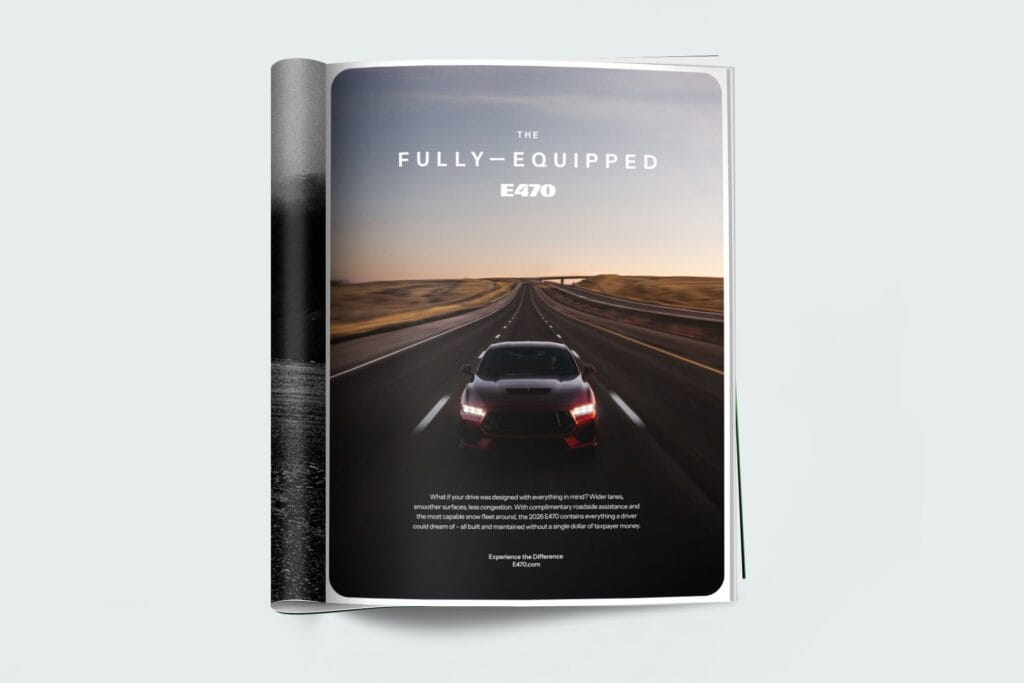
Despite clearly defined elements of automotive advertising, delivering an ad that comes across as part of the sector and not a parody is a challenge E470 has answered well.
2.) ‘Back Your Body’ – Holland & Barrett:
With more retailers entering the supplement and wellness space, from Amazon to grocers like Tesco and Sainsbury – the ubiquity of protein and nutrition leaves heritage brands like Holland & Barrett with less ownable space. Their latest ad, “Back Your Body” seemingly pivots the shops from somewhere to buy creative and supplements, to a whole body wellness brand – moving from gym bros to singing body parts that charmingly encourage consumers to show them love. As the wider market erodes what H&B uniquely offers, a new position is needed, but a lack of specificity will be a challenge in establishing what the brand is actionably doing in consumers’ lives.
3.) ‘Golf With Us’ – Bank of America:
Rory McIlroy’s (early rounds) may have made the Masters seem like child’s play, but Bank of America has taken it a step further. Airing during the Master’s, their campaign promotes the ‘Golf With Us’ initiative, offering a free one year membership to kids 6-18 to ‘Youth on Course’ (giving access to tee times for $5 or less on courses around the US). The ads remake classic Master’s moments with kids, from Jack Nicolas’ 1986 17th hole birdie putt to McIlroy’s 2025 second shot approach. While many won’t realize the depth of each ad’s references, for golf engaged parents (and their kids) the references should do well to tap into post tournament interest in the sport.
4.) ‘Dry Time is My Time’ – Canada Dry:
Beverage brand Canada Dry’s latest campaign aims to commiserate with you over the challenges of daily life, with a combination of classical painting and modern refreshment. Using a renaissance painting mechanic, similar to Street Easy’s ‘Let the Journey Begin’, the ads highlight the problems of the day in paint – before trying to establish the drink as a daily ritual to unwind. While GenAI is unlocking more multi-style creativity, especially against traditional visual approaches like classical paintings, the ads are facing a bigger challenge in pivoting the brand from a problem / solution usage occasion (often for upset stomach or illness) through to relaxation and indulgence. A Carvaggio nod may start that journey, but it won’t finish it on its own.
// Sunday Snippets
// Marketing & Advertising //
– Huggies has adapted soccer chants into white noise to help babies sleep during the World Cup [Sports]
– Macmillan paints a picture of what cancer support needs to be for everyone [Health]
– Google takes a road trip to Coachella to promote the brand’s AI creative tools [AI]
– Jell-O turns its product’s ‘jiggle’ into a way to measure fan intensity [Food]
– Food Delivery turns the ‘K Shaped’ economy on its head [Food]
– Hyundai aims to help preserve underwater ‘forest’ ecosystems by naming them [Sustainability]
– Heineken launches the ‘Clinker’ at this year’s Coachella, allowing music fans to match over tastes and a beer [Music]
// Technology & Media //
– Dentsu’s new report maps the short term and long term effects of video formats on brand equity [Media]
– Pew maps where Americans get health information and what they trust [Media]
– How Reddit’s depth is the social network’s secret weapon [Social Media]
– How teens are roleplaying with AI chatbots [AI]
– Anthropic goes further into infrastructure with managed agents [AI]
// Life & Culture //
– Nike’s new world cup jerseys have more than a chip on their shoulder [Sports]
– Gen Z is trading the neighborhood bar for the spin studio – but who says you can’t have both [Fitness]
– Pew breaks down what Americans consider moral and immoral? [Culture]
– Breaking down the superfan economy? [Culture]
– Inside life as a ‘Do Not Disturb’ Maximalist [Technology]
// Until Next Sunday
As always, let me know what you think by email (dubose@newclassic.agency), website or on LinkedIn. You can also listen to an audio summary and discussion of each week’s newsletter on Spotify. We’re also on TikTok!