In the 100th issue of Sunday Strategy, we look at six stories to think about next week, including: the Myth of Child Prodigies, ChatGPT Enters Advertising, UK Brands Embrace ‘Jab-uary’ , Micro-apps vs. SAS, Strategy as a Protocol and the Generational Consumer Confidence Gap.
In addition, we have ads from: Situation Sthlm, Lego Pokemon, New York Lottery, Dos Equis and Cadbury.
// Stories of the Week:
1.) The Myth of the Child Prodigy.
Does adult greatness start with childhood genius? We naturally assume that elite adults come from talented children who commit early to a pursuit and hone their skills over time. However, new research analysing 34,000 elite performers across sport, chess, music and academia found that 90% of them were not exceptional as children, while only 10% of top-performing youngsters became exceptional adults.
The study suggests that maintaining broader interests and specialising later leads to better “training efficiency” and faster progress, contradicting the conventional wisdom of early and intensive drilling. Instead of ‘hothousing’ promising children early, talent should be nurtured alongside complementary skills and interests. Avoiding a singular focus for ‘child prodigies’ helps create talented adults by allowing for greater exploration, experience in learning diverse skills and a lower risk of burnout.
The research may have focused on talented children, but the findings are applicable to everyone. A sense that we’re ‘too late’ comes from a similar myth to that of a ‘child prodigy’. Both discount the value in diverse skillsets and learning. While not everyone will achieve ‘elite’ status, the ability to learn, not just hone a singular skill, is increasingly valuable.
2.) ChatGPT Introduces Advertising
OpenAI announced the long anticipated plan to integrate ads into ChatGPT this week, creating a new usage tier ‘ChatGPT Go’ and trialling ads in the ‘Free’ and ‘Go’ tier. OpenAI credits advertising with helping to expand the reach of their technology, funding greater access and aligning with their wider brand principles. Ads are claimed to not influence the results AI gives you, instead complimenting results and being clearly labelled. While ads were long anticipated on the platform, what does it mean for user trust?
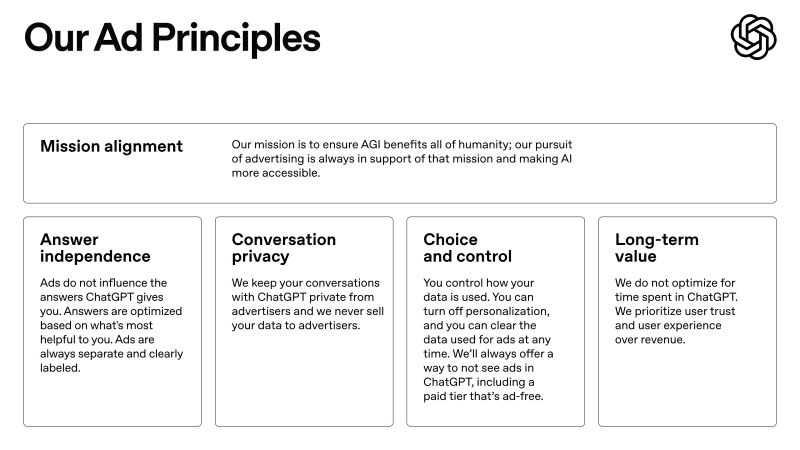
2025 global BCG research shows that 43% of consumers who use AI have researched brands and products. Black Friday was a trial run for much of OpenAI’s approach and as many consumers used AI to find the best deals, paid placement integration was inevitable.

Though AI and agentic shopping are increasingly seamless, privacy concerns remain- with consumers wondering how their answers and conversations are used to target advertising. Search ads benefitted from being a directive interface, offering a transactional relationship vs. AI. As AI guides more and more of the consumer journey, trust that the information being provided is objective and that other, non-shopping conversations have needed privacy is important. How OpenAI balances advertising with the intimate relationship it’s created in consumers’ lives will determine both its advertising success and long-term platform viability.
3.) Grocers Settle Into ‘Jab-uary’.
The growth of GLP-1s in the UK has reshaped how restaurants and grocery stores organize and market food. Grocery stores have reorganized during ‘Jab-uary’, with UK grocer Ocado launching a new virtual ‘weight management’ aisle for those on weight loss drugs and selling nutrient dense M&S meals. Competitor Co-Op has introduced smaller portion ‘mini-meals’, while Morrisons has a range of ‘GLP-1’ ready meals for sale. Outside of groceries, the co-founder of UK fast food chain Leon said he sees GLP-1s as a huge opportunity, seeing his chain’s low sugar and spiced foods as complementary to altered tasted perceptions..
While only 6% of the UK are reportedly on weight loss drugs, and many brands have yet to explicitly message around it outside of general ‘weight loss’ – the drugs are having an outsized cultural moment. For chains looking to shrink portions and costs, or find greater relevance amidst health seeking consumers, ‘Jab-uary’ looks to provide an immediate opportunity.
4.) Personal ‘Micro-Apps’ vs SaaS
‘Vibe Coding’, where users can create low code or no-code apps with AI through platforms like Lovable, Replit, Cursor or Antigravity – hasn’t just opened up software development to more people, it may have changed how we need to think about app functionality and SaaS products. As TechCrunch highlights in the article below, more people are using these tools to create personalised apps, solving specific problems and creating hyper relevant functionality for themselves, often for a limited period of time (users in the article created apps for holidays, trips or specific challenges in daily life).
The personal use of vibe coding gets around one of its biggest barriers, scaling and distribution. UX needs and security considerations exponentially grow with user count, something the personal ‘micro-app’ avoids. It also creates an interesting challenge for SaaS tools, as users are beginning to copy individual functionality in paid tools vs. replicating the entire platform.
While ‘vibe coding’ demos show someone ‘recreating’ old Twitter or SEO tools, the growth of personal ‘micro-apps’ makes it more likely someone may copy one functionality into a narrow app – used personally or with a close knit group. In the near future, ‘vibe coding’ will likely reshape individual user behaviors long before it disrupts app stores or the broader market.
5.) Strategy as a Protocol
Conversations about AI and strategy may seem new, but a lot of the truths they cover are timeless. A LinkedIn post by Igor Schawarzmann, sharing a GitHub repository he’s created to automate strategic development with Claude AI, struck me as speaking to a more constant truth about strategy as a whole. As he describes strategy in the context of AI, ‘you cannot delegate what you cannot articulate’. His belief that ‘AI forces transparency. Transparency enables creativity. Better strategy comes from making your implicit method explicit’ may seem tied to AI and strategy, but it applies equally to how strategy teams need to operate within agencies.
In a growing age of transferable AI skill bases, the need for strategists to codify, communicate and augment their process is important, but no less important than it was before. Whereas many strategists are wondering how to turn AI into collaborators across ‘Claude CoWork’ or Google’s ‘Personal Intelligence’ platforms, the skills needed aren’t wildly different from how human collaboration is created. Clarity in why we’re doing what we’re doing, transparency on the platform that enables creativity and explicit decisions that guide collective development have always underpinned good strategy.
Considering how to automate parts of the strategic process may also highlight what has always, and will always, makes effective strategy – regardless of the collaborators it engages. Strategy has always been, as its put in the post, a protocol for the transmission of ideas, now we may just have wider or new audiences to reach with it.
See the GitHub Repository for Yourself Here.
// Chart of the Week: The Generational Consumer Confidence Gap
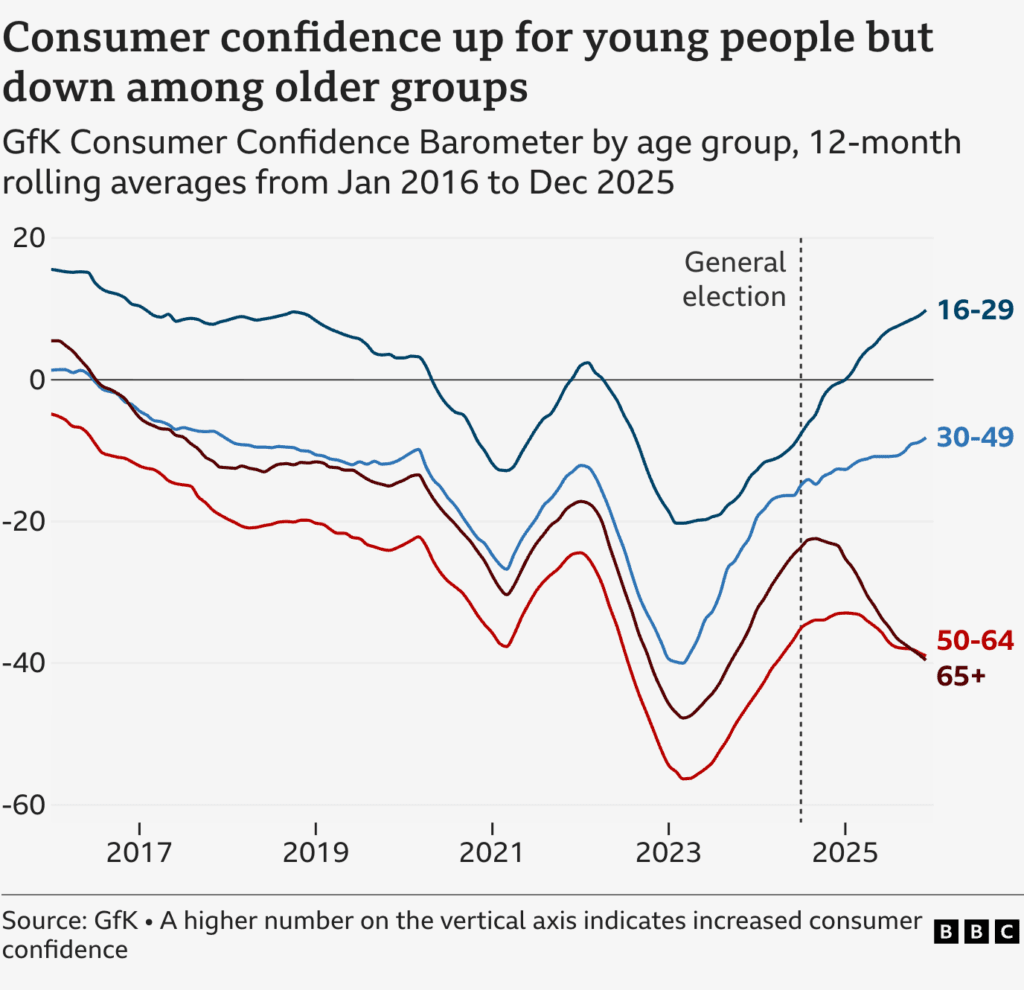
In the UK, and in the US, younger consumers are more confident than their older peers. As shown above, and in partially similar findings from the Conference Board in the US, consumers under 50 are more likely to be confident about the economy than 50+. With stories of rising housing costs, the death of entry level jobs and economic nihilism, what’s driving the relative positivity?
The BBC theorizes that political alignment with current government policies or different media consumption behaviours are driving greater confidence in the UK. However, while the media (and politics in the UK) plays a role – something more widely may be at play… worldview. Older audiences have more expectation towards how the current economy exists, comparing it to rosier economic conditions and lower prices or costs.
While younger consumers are inarguably facing greater challenges to achieve what older audiences may already have, they’ve known nothing but worsening economic conditions. From dot-com crashes to the 2008 recession and Covid, even a 45 year old has spent much of their adult life facing an ongoing string of crises and increasing costs. After years of knowing nothing but chaos and challenges, younger audiences may have adjusted their goals or their expectations of how accommodating the economy can be. They aren’t optimistic, but they’re more pragmatic about what they face.
// Ads You Might Have Missed:
1.) ‘A Day in the Life’ – Situation Sthlm:
Swedish street newspaper ‘Situation Sthlm’s latest ad strikes a balance between highlighting the challenges facing those experiencing homelessness in Stockholm and fighting the ‘othering’ often seen when depicting their current reality. In a similar spirit to the paper’s mission itself, giving people a job to raise money by buying the paper and selling it at a markup – the ad itself creates ties to a viewer’s daily life and shares aspects of the type of day-in-the-life video you might see in social media.
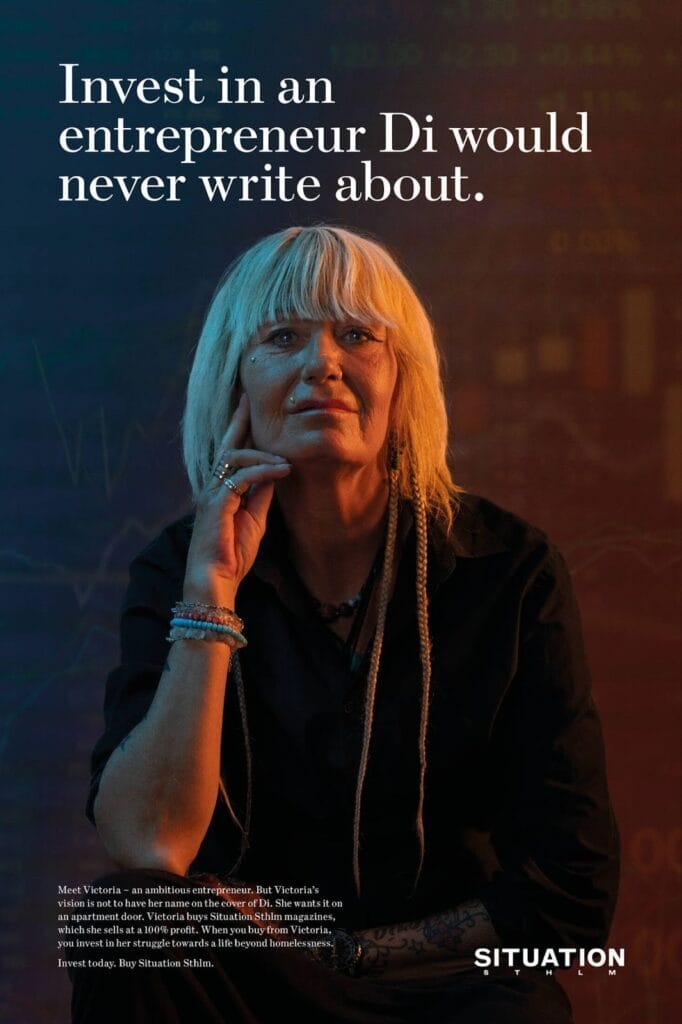
From commuting to time with others in the magazine’s office, a coffee and moments of friendship, the ad ensures you see the shared humanity behind homelessness while still making the organization’s mission important. Similar to previous poster work, positioning a magazine purchase as investing in the ambitions of an individual, Situation Sthlm’s communications ensure help for those experiencing homelessness doesn’t come at the cost of their humanity or our shared experience. It’s not about ‘the homeless’, but helping people like you in the midst of homelessness.
2.) ‘Catch and Build Them All’ – Lego Pokemon:
At nearly 30 years old, Pokemon stretches across generations in a way many franchises can’t. Players of Pokemon Red or Yellow as kids in 1996 may easily be in their 30s now – trading pokeballs for what the ad calls ‘lower back pain’. The realization of time passed doesn’t have to trigger an existential crisis however, as a new partnership between Lego and Pokemon, seeing the release of different Lego versions of key creatures, features an ad reawakening the trainer in a variety of adults.
The ad sees the partnership’s announcement as the trigger for a mid 30s to 50s friend group sets back out to ‘catch them all’ and in the process, shows how far Lego will go to court the kidulthood market. Pokemon represents a unique balance of nostalgia and intergenerational relevance, allowing the toy maker to engage parents and kids with similar creatures. Amongst the current wave of 90s nostalgia, this looks to be the beginning of a much larger launch of Lego Pokemon creatures.
3.) ‘Multiply Your Benjamins’ – New York Lottery:
Lottery advertising often avoids cash amounts to speak instead about the dreams money can unlock. However, the New York Lottery’s latest ad, focusing on the ‘Multiplier Ticket’ that multiplies winnings between 10x and 100x, sees currency come to life in a way that reinterprets the ‘Benjamins’, with the currency’s namesake gathering around a scratch off win. Asking ‘What you’ll do with all those extra Benjamins’ and featuring a gaggle of Ben Franklins – it deftly uses humour to talk about an amount of money without getting stuck in numbers.
4.) ‘The Return of the Most Interesting Man in the World’ – Dos Equis:
Can resurrecting an ad campaign resurrect a brand’s success? Dos Equis certainly hopes so. 10 years after they stopped their seminal ‘Most Interesting Man in the World’ campaign, the brand is bringing it back. In the face of declining sales, down 8% in 2025 vs. competitor Corona’s 2% decline, Dos Equis is seemingly hitting rewind on a campaign many consumers still remember. But can cultural equity be unfrozen in case of emergency?
Actor Jonathan Goldsmith helped create a character that was attributed to tripling the beer brand’s sales between 2006 and 2016, placing the character on SNL and in culture – as well as creating a friendship between the actor and ex-President Barack Obama. However, after being sent to Mars, ‘Poochie from the Simpsons’ style, and seeing a lackluster reboot, the brand moved in other directions. Now, with a large-scale reveal of his return on Monday night (during the US NCAA College Football Championship) are we poised to see him pick up where he left off?
Nostalgia is a powerful force and an argument can be made that familiarity from the past has significance right now. However, translating latent awareness and nostalgia into sales may be a bigger challenge than assumed. The brand claims 84% of consumers who were exposed to the campaign want it to return and it generated 97% brand recall in testing. However, ‘The Most Interesting Man’ created distinctiveness, beyond awareness, and that may have faded with time into a shared pool of cultural memory. Remembering isn’t the same as engaging. How much the brand can reapply the character, while still leveraging nostalgia and familiarity, may be the defining factor in a successful return. He’s back, so now what?
5.) ‘Homesick’ – Cadbury:
Cadbury’s long running ‘Glass and a Half’ brand platform has taken the brand to various big and small human moments. Its latest entry ‘homesick’ is a quietly truthful take on the experience many will have when in different countries or timezones from family. The simple execution shows a woman calling home to leave a voicemail for her younger sister, thanking her for sending a package and enjoying the chocolate sent from home. Straightforward in its execution, and a bit reductionist in its depiction of the ‘Asian location’ that the sister inhabits, the ad shows that when a human truth is understood, the execution around it doesn’t have to work hard to convey the point.
// Sunday Snippets
// Marketing & Advertising //
– The British Heart Foundation takes 3 minutes, the time period in which someone dies of cardiovascular disease in the UK to talk about the impact and experience of a heart attack [Health]
– ManyPets insurance taps ODB and a liberal use of animal tails to promote taking care of your pets / ‘tail mates’ [Pets]
– Looking at the rise, fall and possible return of Sweetgreen [Food]
– Apple Music has released a teaser for Bad Bunny’s Superbowl Halftime show, featuring his song ‘Baile Inolvidable’ [Music]
– Chicago’s Field Museum has launched a Pokemon Fossil Museum [Culture]
– Delta Airlines opens a hospitality area at the Las Vegas Sphere [Travel]
– Topps celebrates what might have been with a Dan Marino baseball card [Sports]
– PBS takes a moment to memorialise the institutions it has outlasted on Instagram [Media]
– Austria Tourism launches a campaign promoting holidays so good, you’ll need to sign a NDA [Travel]
– Tourism Ireland uses the story of a lost hat to show how they ‘go beyond’ [Travel]
// Technology & Media //
– Is Direct Mail the ‘real’ marketing channel answering an ‘unreal age’? [Media]
– ‘The Pitt’ and the rise of ‘Competency Porn’ [TV]
– Comparing Apple’s recently announced ‘Creator Studio’ to Adobe’s ‘Creative Suite’ [Technology]
– An unexpected speed bump in the AI boom may be a lack of skilled tradespeople to build data centers [AI]
– After 14 years of leading Lucasfilm, Kathleen Kennedy is stepping down and her role is being split in two [Film]
– Google announces Universal Commerce Protocol (UCP), advancing agentic commerce capabilities and allowing for purchase in AI chat [AI]
– WPP announces a hub of ‘super agents’ offering agency capabilities at CES – but can they strike a balance between innovation and making their agencies redundant? [AI]
// Life & Culture //
– As minimum wage for gig workers goes up, do consumer tips go down or is something else at play? [Work]
– Are we seeing the dawn of the ‘Post Literate Society’? [Culture]
– The tyranny of the ‘hot mom’ ideal [Culture]
– Americans predict a challenging 2026 across several dimensions, according to Gallup [Research]
– ‘Choppelganger’ reportedly enters the GenZ lexicon [Culture]
– Is it time to declare a new age beyond the anthropocene, to the ‘Polycene’ [Culture]
// Until Next Sunday and the Next 99 After That!
Finally, thank you for reading these first 100 issues of Sunday Strategy. I appreciate each and every one you and how you’ve supported the newsletter.
Now more than ever, let me know what you think by email (dubose@newclassic.agency), website or on LinkedIn.
You can also listen to an audio summary and discussion of each week’s newsletter on Spotify. We’re also on TikTok!