In this issue of Sunday Strategy, we look at four stories to think about next week, including: the Risk of ‘Ad Like Objects’ vs. AI, Can Twitter Make a Comeback, The State of Enterprise AI and Selling Emotion vs. University Education.
In addition, we have ads from: Intermarche, Tinder, Snickers, Zoom and Red Lobster.
// Stories of the Week:
1.) The Enduring Risk of the ‘Ad-Like Object’.
This week saw McDonald’s Dutch AI Christmas ad become the latest recipient of the AI hype and hate cycle. Focusing on the pains of the holiday season (and optimistically positioning the restaurant as somewhere to escape it), it received a torrent of online hate before being pulled.
While the ad’s response may make it seem like any AI ads are ‘slop’, the alternative may be increasingly true. Good ads that happen to be AI, especially those acknowledging it or using it as a foil, can find success. Additionally, between technological refinement and IP deals, like the recent one between Disney & OpenAI, it seems inevitable that AI ads can win over consumers through familiarity and indiscernible differences from human created work.
However, while the risk of blanket AI hate should decline, an enduring threat remains (one that the McDonald’s ad potentially suffers from) in ‘The Risk of the Ad Like Object’. An ‘ad like object’ is something that walks and talks like an ad, passing initial appraisal, but lacks substance or outcome. It’s shiny, it sounds nice and if you don’t poke at it, it’s ok. These aren’t exclusive to AI. A pithy line, a glamorous art direction or a celebrity endorsement have all enabled ads to be empty vessels masquerading as effective advertising for decades. However, the refinement of AI should make it easier and faster to create work that papers over the lack of intention, outtake or delivery – stripping out moments of analysis to ensure it’s there. If anything, refined AI technology will enable a golden age of ‘ad like objects’ as it becomes more accepted.
McDonald’s ad may have garnered unwarranted negativity for its use of AI, but warranted criticism for its strategic intention. Arguments about the lack of emotional response or humanity may lay less with the technology used and more with the disconnect between ambition and reality. Bonding over the chaos of the holidays is admirable, but positioning a McDonald’s store as the oasis of calm amongst it may be too big of a task – for either human or machine. The reality of what creativity has been asked to do here breaks well before it gets to AI and it reflects where we may be headed. When we can believably make anything, the risk of making something that lacks intention and impact positively correlates. Perhaps it’s not ‘slop’ we should watch out for, as much as empty ‘sizzle’.
2.) Can Twitter Make a Comeback?
Since Elon Musk’s takeover of Twitter and rebrand to X, there are numerous competitors that have aimed to fill the gap left by Twitter’s departure – from Threads to Bluesky, Mastodon and more. However, could Twitter make a comeback? X isn’t going anywhere, but instead an initiative called ‘Operation Bluebird’ is aiming to claim trademarks for ‘Twitter’ and ‘Tweets’ they claim have been abandoned by X. While the case has a way to go, ‘Operation Bluebird’ has already launched twitter.new where users can reserve their handle in case it does launch.
So how powerful are Twitter’s old assets? There’s undeniably a sense of nostalgia for the role Twitter played in culture before its ideological rebrand to X – but can new Twitter scale on nostalgia from a cold start? Or will it find itself in the middle of the micro-blogging peloton of other competitors? The absence of a new Twitter doesn’t necessarily mean old Twitter is primed to come back on name alone.
3.) The State of Enterprise AI.
OpenAI’s new ‘The State of Enterprise’ report provides a view on the widening gap in AI usage amongst large scale firms – with ‘frontier workers’ (AI use leaders) and firms sending 6x more messages and 2x more messages per seat than median enterprise companies. Polarization of use between firms may explain a diverging narrative in Enterprise AI, where many firms are reporting struggles to scale AI implementation, while those that have doubled down continue to increase frequency of use. With OpenAI’s research claiming a 10+ hour productivity gain from their heaviest enterprise users, getting over a widening implementation gap may be one of the core challenges for firms in 2026.
4.) How Much Are Universities Selling Emotion vs. Education?
Has modern university marketing reached peak ‘vibes’? Amidst increasing pessimism about the impact and confusion on the costs of a four year degree in the US, education seems to have shifted from a rational economic sell to an emotional one.
As southern universities report an increase in students from around the US, driven in part by social media coverage of #Rushtok and sporting culture, the draw for student debt seems to be increasingly social. As students are unclear on when and if their education will provide an advantage in a tumultuous job market, many may be making decisions on the social value of four years in an institution. However, universities may not be able to explicitly capitalize on this directly, leaving sports success and social media from students as indirect levers for growth.
Additionally, as the sell for younger students may become more social, older workers are considering re-entering school for job security in the face of changing industries and AI. Though mixed results for post-graduate certifications and greater competition from non-traditional courses, like OpenAI and Google’s initiatives, leaves larger educational institutions to sell a sense of job security from study without robust proof points.
Instead we may be seeing a market where outside of the top universities, education is being sold through different sides of the emotional spectrum – with a feeling of socialization or security being intangibly offered vs. hard costs.
// Ads You Might Have Missed:
1.) ‘The Unloved’ – Intermarche:
European supermarket Intermarche may have made the holiday ad for vegetarianism that PETA never did. ‘The Unloved’ sees a man tell a child, afraid of a wolf doll they’ve been gifted, the story of a wolf that goes from feared to a friend of woodland creatures thanks to a shift in his diet. Prompted to think about not eating other creatures as a way to avoid isolation, the wolf explores different recipes before delivering a holiday vegetarian dish at a holiday dinner. Intermarche delivers a message on thinking differently about food deftly, but unintentionally also delivers a metaphor for the predatory nature of meat eating without even trying. Unlike PETA’s real UK holiday ad, the only blood seen in Intermarche’s are beets.
*For more holiday ads, check out our list of over a thousand ads from around the world, spanning from 2025 back to the 80s.*
2.) ‘I Use Zoom’ – Zoom:
Video conferencing brand Zoom has launched a new ad campaign to consolidate market share in an age of greater video conferencing options. While becoming a verb since 2020’s pandemic, Zoom’s post Covid period has seen video conferencing competition, IT department policies and bundling erode market share. “I Use Zoom” aims to start a ‘movement’ to request Zoom usage, using SNL’s Bowen Yang in an ad that’s as much 1984 as it is ‘Dead Poet’s Society’.
Though the ad has a strong observation at its heart, ‘no one enjoys a multitude of video conferencing platforms, with smaller ones deserving special scorn’ – it doesn’t seem to engage with levers to change this situation. It’s one thing to start a movement, it’s another to talk about it and there’s a larger question about who has the power to change video conferencing platforms against unclear IT rules, default features and more.
3.) ‘Breakup Bangs’ – Tinder:
Can a dating app focus on the downside of dating? Whereas dating apps normally focus on the excitement of meeting someone or the passion of romance, Tinder’s new activation heads straight into breakups. The brand is offering ‘Breakup Bangs’ wigs, which allow women to get breakup bangs without getting breakup bangs for real, on December 11th – apparently the most popular day for relationships to end before Christmas. The activation shows the unique position Tinder occupies in the dating market, perceived as more for hookups – the end of a relationship and beginning of the search for a new (short or long term one) isn’t as serious for the brand as it is for others.
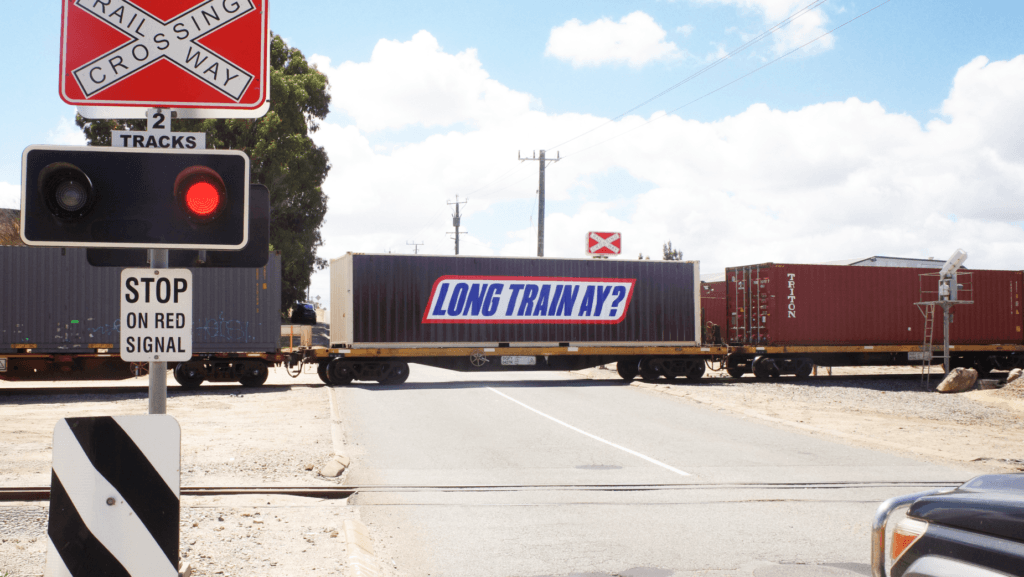
4.) ‘Hunger Train’ – Snickers:
With more than 23,000 train / road crossings in Australia, waiting for a train is commonplace in a lot of Aussie daily driving. Snickers has taken their long running ‘You’re Not You When You’re Hungry’ brand platform to the wait times many Australian trips experience, turning 50 train cars around Western Australia into rolling ads. The innovative use of media takes train intersection waits and delivers a brand message – prompting drivers to think how much better the wait would be with a Snickers packed. While the clever idea is a departure from the foundations of the ‘you’re not you when…’ platform – it takes a similar emotional territory while showing how media creativity can take the brand to new areas.
5.) ‘The Red Lobsttery’ – Red Lobster:
The US casual dining sector has taken a number of different approaches to address economic uncertainty, greater delivery share and reduced consumer spending on eating out. From building social cache and nostalgia to value based promotions – brands like Chili’s, Applebee’s and others have stretched their value proposition. In a direct move, Red Lobster has introduced the ‘Red Lobsttery’, a promotion that sees each $25 gift card purchased for the rest of 2025 offer an entry to win a $25,000 prize. While others have offered free cinema tickets or value deals, Red Lobster’s move is unique in its separation from the food it serves, instead providing another point in the argument that ‘everything is gambling’ in modern culture and potentially saying something about its dining experience through the omission.
// Sunday Snippets
// Marketing & Advertising //
– Disney+ and Prince Street Pizza partner to bring Home Alone’s ‘Little Nero’s Pizza’ to life for the 35th anniversary of the movie. [Food]
– Cracker Barrel’s August rebrand blamed for lackluster financial performance [Branding]
– Dave & Busters turn the arcade claw machine into a purse in a new collaboration with Chain [Entertainment]
– Home Depot is dealing with a Christmas crisis: a shortage of lawn ornaments [Culture]
– Bud Light announces limited edition ‘snow beer’, made with snow from the Buffalo Bills stadium [Food]
// Technology & Media //
– Kim Kardashian brings SKIMS inspired outfits to Fortnite [Gaming]
– GenZ’s search for decorative collectables is apparently driving Vinyl sales [Media]
– Maker’s Mark announces first sports partnership with challenger women’s basketball league, Unrivaled [Sports]
– YouTube recaps its 2025 creator trends [Social Media]
– Will 2026 see the return of Google Glass(es)? [Technology]
– Google drops Disco, a browser with ‘Gen Tabs’ powered by Gemini [Media]
– In response to Google’s Gemini update, OpenAI has launched ChatGPT 5.2 [AI]
– Reddit has begun testing verified user profiles [Social Media]
– Gartner urges businesses to block all AI browsers over security concerns [AI]
– Meta releases Worldgen – an end to end text to immersive world system [AI]
– Can you train a LLM to confess bad behaviour? [AI]
– WPP has released their ‘State of Media’ report for 2026 [Media]
// Life & Culture //
– When did Christmas Ornaments become cultural statements? [Culture]
– Will ‘fiber’ take over for ‘protein’ as American consumers’ next obsession? [Food]
– Breaking down the ‘swag gap’ in dating [Culture]
– Chinese Businesses are transforming Mexico City’s poshest neighborhood [Business]
– A lower league Wisconsin hockey team rebranded for one night to reference the conspiracy theory that ‘Birds aren’t real’ [Sports]
– A Manchester bar bans solo drinkers after 9pm [Nightlife]
– Stellantis confirms the tiny FIAT Topolino will launch in the US. May the odds be in your favour when it’s taken on the interstate. [Auto]
– UK chain PureGym has taken over previous Blink Fitness locations in NYC and brought gym ‘entry tubes’ with it – New Yorkers are shook. [Fitness]
– GoFundMe’s ‘year in help’ report announces a surge in users fundraising for daily needs on the platform [Charity]
– Is London’s hottest new club night on a Monday? [Nightlife]
– Columbia Outdoor partners with Star Wars to create an ‘Endor’ themed collection, though at these prices you might need a second job driving an AT-ST. That joke killed in Tatooine. [Fashion]
// Until Next Sunday
As always, let me know what you think by email (dubose@newclassic.agency), website or on LinkedIn.
You can also listen to an audio summary and discussion of each week’s newsletter on Spotify. We’re also on TikTok!