The 2026 Super Bowl delivered another masterclass — and a few misfires — in how brands use celebrity, heritage, and nostalgia on the biggest ad stage. This issue breaks down how celebrity was used, how to activate heritage, the weight-loss ad wave, the big-game AI fight, and what counts as ownable nostalgia.
// Super Bowl Stories of the Week:
1.) Big Game Celebrity Humor: Shared Moments vs. In-Jokes?
This year’s advertising reinforces there’s no single formula for celebrity Super Bowl ads. Celebrities have traditionally been a vehicle for endorsement or absurd humour, seen this year from the pun-heavy Raisin Bran / William Shatner ad or Instacart’s Benson Boone & Ben Stiller combo to Ritz’s celebrity-heavy ‘Ritz Island’. However, this year’s ads have increasingly tapped celebrity references which require someone on the couch to explain them. As deepfakes and AI make celebrity placement trivial, there may be more value in cultural relevance and deeper references than broad celebrity puns.
Fanatics’ leaned into this approach with their ‘Bet on Kendall’ big game ad, referencing Kendall’s dating history with basketball players whose form dipped while dating Jenner. While the ad’s premise explains the ‘curse’, its full value is for those already aware of Jenner vs. those who are just hearing about it.
More specifically, DoorDash’s ‘Beef 101 with 50 Cent’ requires knowledge of 50’s Diddy feud, and subsequent trolling with the Netflix documentary “Sean Combs: The Reckoning”, to be fully appreciated. While competitor Uber Eats pushes their multi-year ‘NFL is for food’ conspiracy campaign to the masses, at a media frequency where everyone knows the joke, DoorDash has intentionally leaned into in-jokes and tiered references (from the more obvious Diddy jokes, to a nod to another feud with Ja Rule). It takes an even deeper knowledge of celebrity culture beyond a celebrity’s likeness and existence.
DoorDash is betting that Super Bowl advertising has fractured along with media consumption – as you don’t need everyone to get the joke anymore, just enough people to make it feel like an insider moment worth sharing. However, at $7 million per 30 seconds, the risk of being misunderstood by some is still on par with being largely ignored by many – something the delivery brand has defused by only running in key markets.
2.) Did Anyone Do Brand Heritage Better Than Levi’s?
While Volkswagen and Pokemon flexed heritage during this year’s Super Bowl, Levi’s brought their history to life in the most compelling way. Returning to the game after two decades away, ‘Backstory’ ties together cowboys, construction workers, bikers, Bruce Springsteen, Doechii and others through jeans and the backsides wearing them.
The quick pace and breadth of stars and moments puts Levis’ heritage on show, while acknowledging that it had to be entertaining enough to keep viewer attention. The breath of moments is guaranteed to engage a range of viewers and generations, while the soundtrack of James Brown’s ‘Get Up Off of That Thing’ and bottom-centric visuals capture viewers in the moment. When people are expecting entertainment, a heritage play is a hard sell – but with this ad Levi’s reminds us that its history is entertainment.
3.) What View of Weight Loss Lands with America?
GLP-1s were impossible to miss during this year’s game, as Ro, Wegovy, and Hims & Hers all advertised—each with a different vision of what selling health in America looks like. Each offers a distinct perspective on where market maturity stands: from permission to access.
Telehealth brand Ro’s ‘Healthier on Ro’ took the most traditional approach, tackling ‘GLP-1 doubt’ and stigmas through Serena Williams extolling weight loss benefits. The brand doesn’t treat GLP-1 growth as a given, continuing its focus on removing personal and societal barriers to use. However, as 1 in 8 Americans reportedly take these drugs, the market may have moved past Ro’s concerns, with culture, not advertising, making it permissible to not only use but openly discuss GLP-1s.
Wegovy’s entry reflects this market evolution, doubling down on its new oral pill format and highlighting ease through metaphor. Fronted by Kenan Thompson and featuring DJ Khaled, John C. Reilly, and others, it asks: if there was a simple pill enabling you to do helpful things, would you take it? From parking to saving kittens, the pill metaphor extends beyond weight loss, suggesting Wegovy believes format innovation, not stigma reduction, will drive adoption.
Finally, Hims & Hers’ ‘Rich People Live Longer’ sees economic access as the only remaining barrier. Narrated by Common, it takes a class-based view on health, positioning the brand as democratizing access to treatments like GLP-1s. In an ad about the elite’s love of peptides and quality care, the message is clear: everyone wants to buy better health, but not everyone can afford it.
Three brands, three market perspectives. The question is which diagnosis matches reality – or whether all do for varying segments of the population viewing them.
4.) What Vision of AI Landed During the Big Game?
Similarly to GLP-1s, brands shared a variety of AI takes across Super Bowl ads, with Anthropic and OpenAI continuing their accelerating conflict across new ads.
Hot off the news of OpenAI including ads in the free tier of ChatGPT, Anthropic launched a Super Bowl ad to attack the concept of advertising in AI at all. The brand reflects consumers’ concerns about the veracity of AI results and information that includes ads, with an ad elevating the importance of conversations users have with the technology. Sparking controversy before the game, as well as angry rebuttals from OpenAI, Anthropic’s ads use terms like ‘violation’ and ‘betrayal’ while showcasing how advertising poisons the dynamic between AI and user. Promising to never commercialize in a similar way, Anthropic puts OpenAI in a difficult position as it attempts to find greater revenue while facing a vibe shift towards Claude in the market.
OpenAI’s own Super Bowl ad doesn’t respond to Anthropic, instead focusing on building. ‘You Can Just Build’ focuses on its Codex software development platform and continues its future / retro tone with an ad inspiring people to create ideas and software on the platform. Its focus feels much narrower than Anthropic’s and instead focuses on trying to make up the ground Claude Code has culturally covered in the previous month, becoming a darling for the ‘vibe coding’ and democratized programming discussion.
Amongst additional AI ads from Base 44, Google and Amazon, the OpenAI and Anthropic fight looked like two brands headed in different directions to counter each other. Anthropic’s momentum has come from those who found specific, unique use from it (in features like Claude Code, CoWork or its writing tone) and the brand has seized upon it to move more widely during the game through a wedge issue. OpenAI alternatively has seen its market leadership begin to be questioned and has scrambled to counter with a narrower focus and recent Codex releases. With neither taking the other head on, the Super Bowl looks to be one battle in a wider war between platforms aiming to shape the next phase of AI.
5.) When 90s Nostalgia Is Everywhere, Making It Ownable is Key
No one brand had a single claim on 90s nostalgia across Super Bowl ads, as Ben Affleck’s star studded Dunkin entry didn’t just reimagine Good Will Hunting, it included half of the stars of the 90s while doing it.
However, Xfinity’s Super Bowl ad arguably went further and showed how nostalgia can combine to make a brand message land harder. The brand’s ad asks what would have happened if Jurassic Park’s IT department had Xfinity? The ad, ‘Jurassic Park…Works’ takes a ‘what if’ approach to pop culture and paints a rosier picture of how a trip to the park could have played out. Reuniting and de-aging the main stars, as well as pouring on a healthy portion of Jeff Goldblum meme-ry, the ad does cyber-security and resilience without feeling like it’s doing cyber-security and resilience.
The only question now is if this thought, and the marketing budget, can carry on to other, similar, pop culture moments. Die Hard without the first act’s security breach or the 90s movie ‘Hackers’ with less hacking could all benefit from the same treatment.
6.) What Can We Expect Super Bowl Viewers to Do?
What is the level of engagement we can expect from Super Bowl viewers? Is it reasonable to get people watching to scan a QR code (ala Coinbase’s site crashing entry in 2022), enter promo codes (ala DoorDash in 2024) or follow along with alternate game feeds and social media? This year’s crop of ads continued to ask the question, as viewers were challenged to do everything from post on social media or sing along, to changing how they view religion and society.
Chipotle and Luma both featured social media hijacks that took different sides of the AI debate. Chipotle released an Instagram reel during the first ad to use AI, giving 100k customers access to a promo code for a free burrito while championing real ads alongside their ‘real ingredients’. Alternatively tech startup Luma, fresh off courting creatives to make AI ads on platform to be entered into Cannes, offered free pizza to those who unsuccessfully pitched Super Bowl ad ideas to clients this year.
Beyond social media, Salesforce enlisted Mr. Beast to promote its new agentic features in Slack, challenging viewers to decode puzzles in its ad for a chance to win a million dollars. Less lucratively, Coinbase ran an ad featuring karaoke lyrics to the Backstreet Boys ‘Everybody’, confusing people while hoping to spark spontaneous sing-alongs to the 90s classic.
Most ambitiously, religious initiative ‘He Gets Us’ returned again to the Super Bowl to inspire viewers to think differently about religion and society. While previous years aimed to inspire unity or different views towards the church, this year’s focused on growing consumerism and the need for ‘more’. “Is There More to Life Than More” uses the nature of big game advertising as a foil for wider societal appetites, but it raises the question if the occasion is rich for life changing decisions vs. discussions of the Patriots’ offensive struggles.
From singing to solving puzzles, social media or salvation, the view of how viewers watch ads during the game varies brand by brand. However many may be overstating how active a response to an ad can be. Data from last year’s game showed only 26% of people watched the game on their own, with 47% watching it with 2-3 others and 28% with 4+.
These groups will have wildly different potential for participation and brands are seemingly targeting different groups. Smaller groups or individuals may be more apt to dive directly into contests like Mr. Beast’s, while Coinbase’s karaoke ad may benefit from having 4 or more people to spread any shame about singing around .What we can expect Super Bowl viewers to do may vary by situational segment, though true religious reconsideration may be limited to the losing team’s fans.
// Strategically Approaching Valentine’s Day
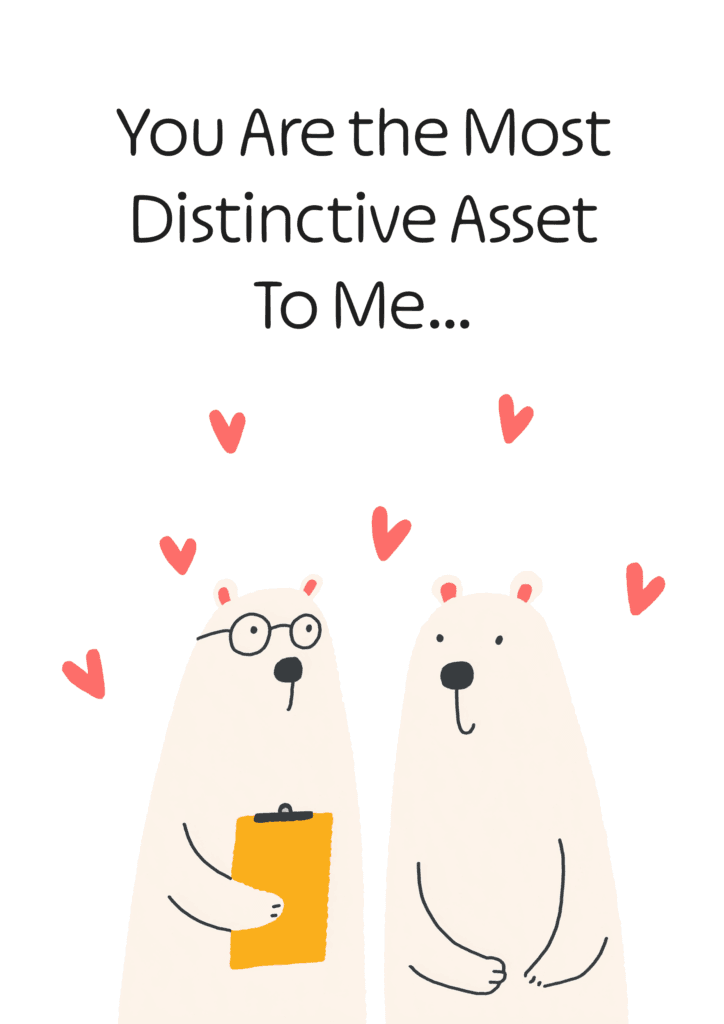
The Super Bowl may be over and Valentine’s Day is on the horizon next weekend. If you want to show a strategist you care, or are a strategist that cares – we’ve created a line of Valentine’s Day cards with enough strategic references to warm the coldest marketing heart.
Download your set here to print at home or enter on our website for a chance to win a limited edition printed set for free (US residents only – so we can get them to you in time).
// Sunday Snippets//
// Marketing & Advertising //
– Clash Royale trumps other ‘competing’ halftime shows, bringing an early one in game and featuring Lil Wayne [Gaming]
– Heinz taps into Super Bowl snack culture with novelty ketchup keg [Food]
– Liquid I.V. taps EJAE to cover Phil Collins’ ‘Against All Odds’ and remind people to stay hydrated. Phil always has struck me as a 1 litre of water a day type [Food]
– Marriott has brought its ‘Sleepover Suite’ to the Super Bowl, allowing two fans to stay over before the game [Travel]
– Novartis has recruited a lineup for Tight Ends to remind people that prostate cancer screenings can start with a blood test in a new NFL themed Super Bowl ad. [Health]
– McDonalds debuts ‘Caviar McNugget Kits’ in time for Valentine’s Day [Food]
– KFC Australia leans into fitness and protein with new creator led social content [Food]
// Technology & Media //
– Fitbit founders launch a platform to let families monitor their health [Tech]
– Snapchat says it blocked 415k+ underage users in Australia [Social Media]
– Spain becomes the first EU country to ban social media for under 16s [Social Media]
– New Jasper research shows 41% of marketers believe they can prove the ROI of AI at work [AI]
– The FT asks why everyone is selling an AI app [AI]
– Amazon Ads launches a MCP server into open beta [Ads]
– The IAB proposes draft legislation to stop AI scraping of content [AI]
// Wider Culture //
– We need to talk about glass walls in modern hotel bathrooms [Travel]
– Fafo Parenting: Is the age of ‘gentle parenting’ over? [Culture]
– To understand China, we need to understand the Chinese internet [Culture]
– Moncler returns to the Winter Olympics after 58 years, sponsoring Team Brazil [Fashion]
– Only 7 petrol cars were sold in Norway in January [Auto]
// Until Next Sunday
As always, let me know what you think by email (dubose@newclassic.agency), website or on LinkedIn. You can also listen to an audio summary and discussion of each week’s newsletter on Spotify. We’re also on TikTok!